




Drying apricots
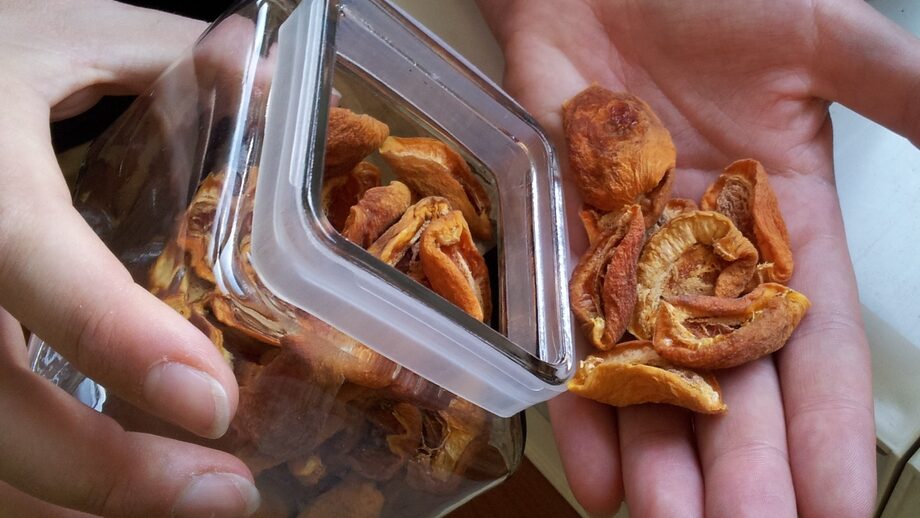
Drying apricots
Drying apricots requires a little more care than with other fruits, particularly in two respects: size and temperature. With the right preparation, however, it is possible to turn ripe apricots into a naturally sweet snack that is easy to store and convenient to take with you.
If you’d like to find out more about the general principles, in our A guide to drying fruit You’ll find guidance on choosing ingredients, cutting, temperatures and storage.
Ingredients
Apricots galore, preferably of medium size, sound and at the right stage of ripeness.
Procedure
The size of the apricots is important. If the longest side is roughly more than 4 cm, the inside of the fruit might take too long to lose all its moisture.
In this case, it is preferable to Cut the apricots into slices about 5 mm thick or into smaller pieces, so as to ensure even drying.
Apricots of a standard size, on the other hand, can be halved and pitted. Then place them on the racks of the’home food dehydrator with the cut side facing upwards, leaving enough space for air to circulate freely.
For this recipe It is not necessary to use baking paper or DrySilk: the apricot halves can be placed directly on the racks.
Even spacing is particularly important with fleshy, water-rich fruits such as apricots: the airflow must be able to reach every piece effectively throughout the process.
Programme
Set the temperature to around 50 °C, increasing the amount if necessary, depending on the size and ripeness of the fruit.
With Biosec, you can use T4 at 50 °C or T5 at 60 °C, as a rough guide for 48–60 hours. To better understand the differences between temperature settings, ventilation and programmes, please refer to the guide to Dryset Pro programmes.
The times are never set in stone: the amount of water, the ripeness and the size of the apricots can affect them considerably.
So please check them from time to time. If their appearance or consistency changes again between checks, it means they are still losing water.
The final test is very simple: Gently press the thickest part of the apricot. It must be firm, and there must be no areas that feel particularly damp or soft.
Once they have finished drying, place the apricots in a a tightly sealed glass jar, keeping them away from light and moisture. To ensure that the food dries properly whilst in storage, you’ll find further advice in the guide on how to store dried food.
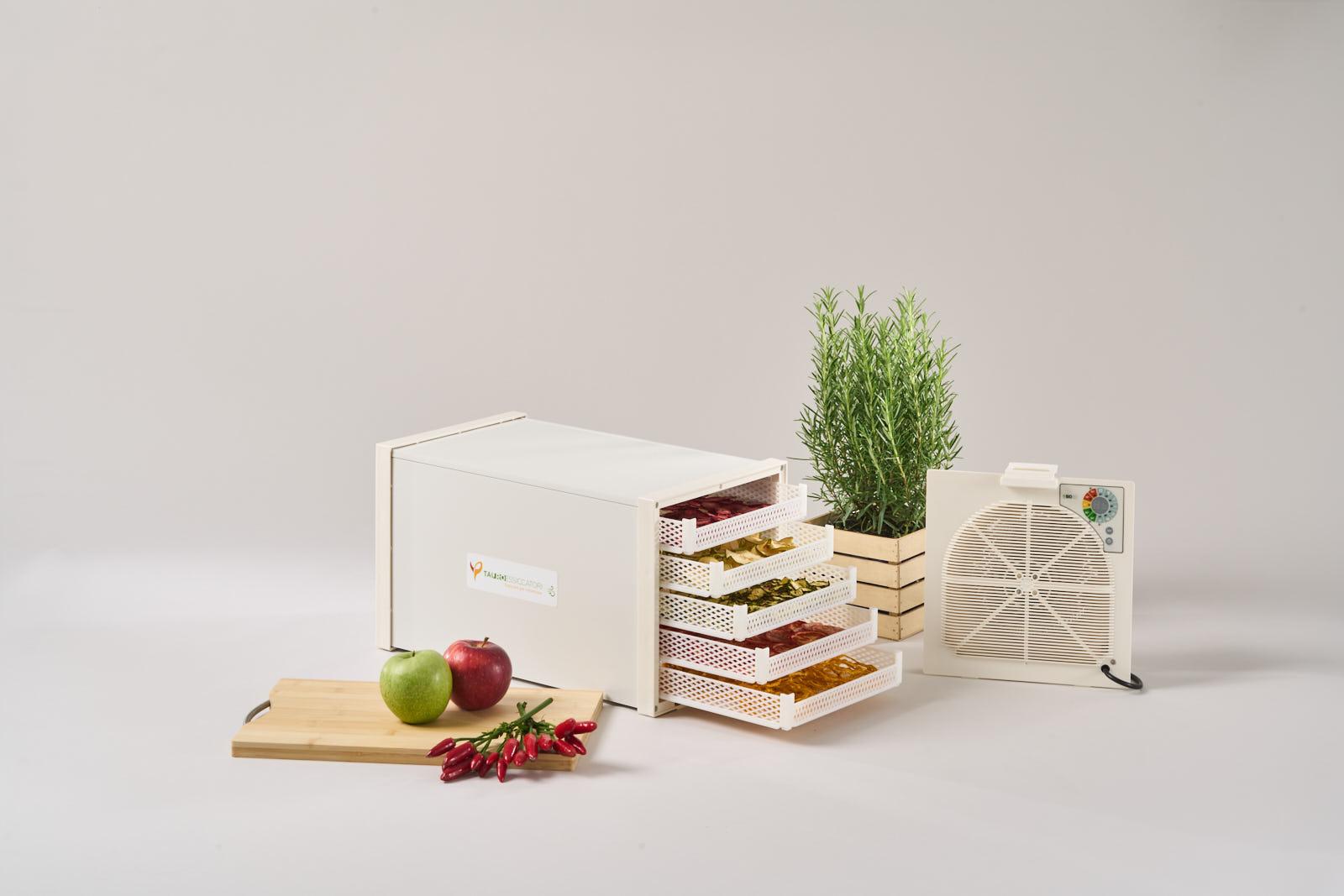
If you usually prepare small quantities of fruit, a compact dehydrator such as Biosec Domus B5 It comes with 5 baskets; for larger harvests or larger quantities, Biosec Domus B10 It increases capacity to 10 baskets whilst retaining the same Biosec drying system.


 Italian
  English
  German
  Spanish
  French
  Romanian