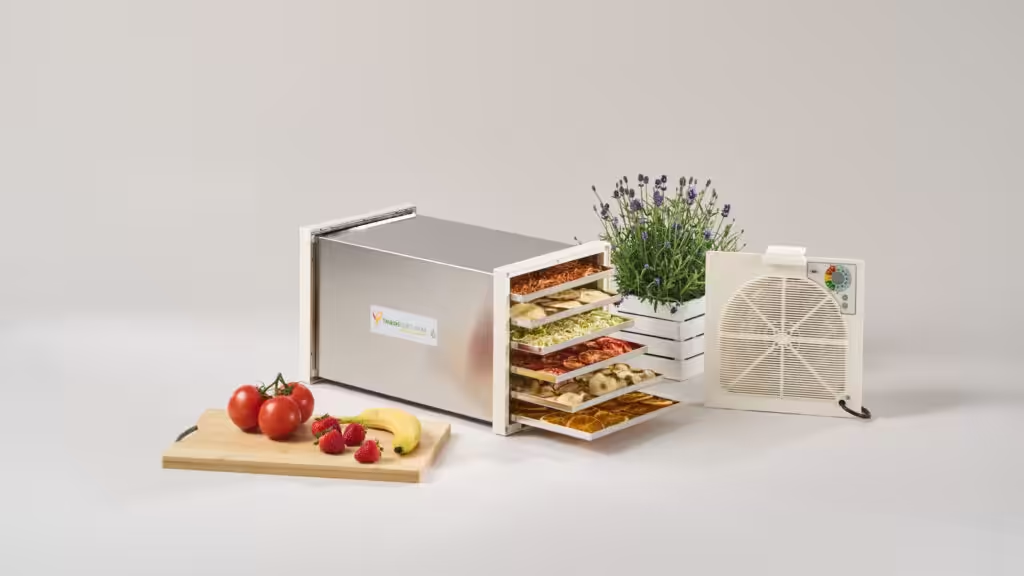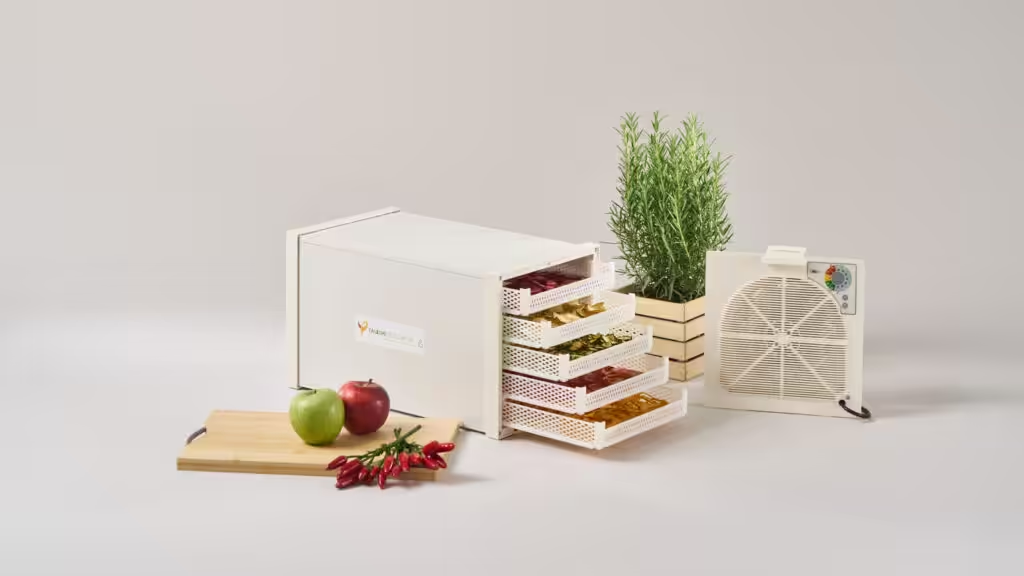
Do you only switch on your dryer to make apples and mushrooms? Do you feel like making the best use of your dryer?
In the Basic Course you will discover the many preparations you can make with the dryer.
First of all, you will understand how a dryer (vertical and horizontal) works in detail, how drying transforms food and how it should be treated to dry it in the best way: preparation and processing, storage and food safety.
I will take you through the basic steps of basic preparation techniques, showing you the results, analysing weak points, possible undesirable results and how to improve. I will share with you my long experience as a dryer.
The advanced course will introduce you to more complex preparations.
The dryer is a chamber with a more or less constant temperature and can be a valuable aid in certain preparation processes, replacing other tools or speeding up certain steps.
I will detail the techniques of these preparations with the basic steps.
I will show you the results, and tell you how I came to work on some preparations, sharing with you the results of my experiments over the years.
Experimenting means evaluating the results, understanding how the product is transformed and preserved. There are many parameters to take into account before a process is concluded. One must not be stopped by unwanted results, but know how to analyse them.
One must keep in mind how the dryer acts on food and always weigh up the pros and cons. We cannot do everything with the dryer. We must always keep in mind what it is made for.
There will also be a little surprise extra!
1. Fruit and vegetables
1.1. Chips or slices
1.2. Dust
1.3. Fruit leather
1.4. Whole or half
2. Non-fried potato crisps
3. Fish and meat
4. Sugar
4.1. Fruit sugar
4.2. Flavoured sugars
4.3. Meringues
4.4. Sugar wafers
5. Milk powder, tinned corn and olive pomace
6. Bars, crackers and breakfast cereals
7. Seeds for the vegetable garden – proofing chamber – wood for smoking
8. Paper
1. Candying
2. Pasta
3. Blowing
4. Dry Wet Dry
5. Sorbet with no added sugar
6. Rice
7. Ready Meals
8. Porkbushi
9. Salt
10. Clarified Butter
11. Infusions
12. Tempered chocolate
13. Black garlic
14. Black lime
15. Yoghurt
16. Instant coffee
17. EXTRA: a surprise!
1. Acquire the techniques, understand the processes to become automatons in more complex productions
2. Learning to ask the right questions to analyse the success of a product that has not
met expectations and understand how to change the process.
3. Understanding the drying process.
4. Self-reliance in basic preparations

Click and write
with WhatsApp Web

Use WhatsApp on your mobile phone.,
frames the QR-code

Click and call
the Tauro experts
 Italian Italian
  English
 German
 Spanish
 French
 Romanian