




Home dryers: how to choose them well
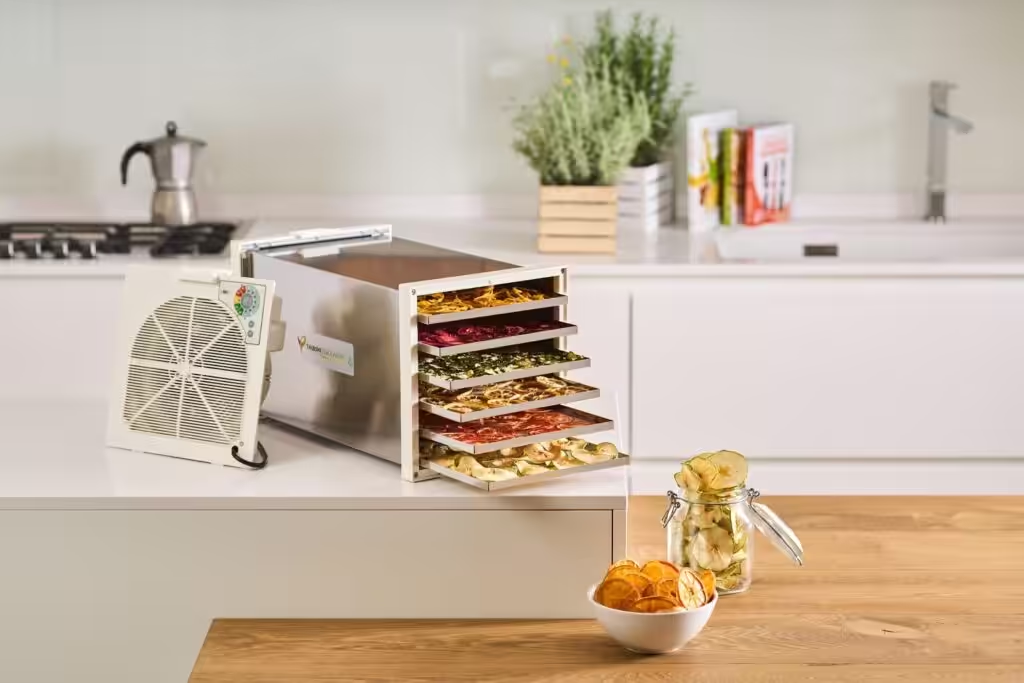
When you bring home a basket of ripe figs, or pick more courgettes and tomatoes than you can consume in a few days, the problem is not cooking more to empty the basket. The problem is preserving well, without losing aroma, colour and nutritional quality. This is where home dryers become a practical tool for those who want to reduce food waste and turn seasonality into a lasting resource.
Talking about home drying does not only mean extending the life of foodstuffs. It means choosing a natural method that concentrates taste and aroma through the gentle evaporation of water, makes it easier to organise the larder and opens up unprecedented creative possibilities. Fruits, vegetables, mushrooms, herbs, sweet and savoury preparations: with properly executed drying, the raw material changes shape and volume but retains its organoleptic identity. Compared to refrigeration or boiling, drying preserves fibres and micronutrients without adding chemical preservatives, salt or sugar.
Why choose home dryers
Many people approach the world of the dryer after realising the limitations of other preservation systems. The freezer takes up valuable space, consumes energy constantly and often alters the textures of watery vegetables. Preserving requires long preparation times, complex sterilisation processes and recipes that often include a lot of fat or sugar. Drying, on the other hand, works on controlled moisture removal and allows food to be stored in a practical, light and clean way.
The most obvious advantage is the strategic management of abundance. If the garden produces everything at the same time, if the local market offers seasonal fruit at peak ripeness, the drier allows the surplus to be exploited instead of allowing it to deteriorate. It is a useful choice for the family economy, but also for those who have a sensitivity towards agricultural work and wish to respect the effort behind each individual fruit. Drying reduces the weight and bulk of produce by up to 80-90%, making larder management much more efficient.
There is also a qualitative aspect that defines the difference between a simply dried product and a properly dried one. A well-processed foodstuff must retain a clear aroma, a bright colour and a consistency consistent with the original product. This is why, in the panorama of domestic appliances, not all technical solutions lead to the same result.
How home dryers really work: the secret of horizontal flow
The physical principle is elementary: a temperature-controlled flow of air passes through the product and accompanies its surface evaporation. In practice, however, it is the engineering details that determine the final quality of the food supply. Constant temperature, flow uniformity and correct moisture expulsion directly affect the shelf life of the food.
In many cheap tower models, the air circulates vertically, starting at the bottom and rising to the top. This system forces the air to become saturated with moisture already in the first shelves, reaching the upper shelves with reduced effectiveness. The result is uneven drying that forces people to constantly reverse the position of the racks. In contrast, a system with horizontal air flow, such as that which characterises Biosec's construction philosophy, distributes the air evenly over each individual shelf. The air enters from one side, passes longitudinally through all the trays and exits from the opposite side, carrying the moisture away in a constant and balanced manner.
This point is decisive for practical everyday use. Those who use the dryer at home are looking for an effective tool that does not require constant supervision. If the process is uniform, there is no need to move trays or obsessively check each slice. A good home appliance must guarantee a reliable result through a readable process, allowing the enthusiast to devote himself to preparing the raw material with the confidence that the technology will do the rest.
Household dryers: what to consider before buying
The first question to ask is not the number of trays, but the frequency and type of intended use. Someone who intends to occasionally dry apple slices or a few herbs has different needs than someone who works on a weekly basis with vegetables, forest-gathered mushrooms, preparations for a raw diet or vegetable crackers.
For occasional domestic use or for small quantities, Biosec Domus B5 It is the most compact model in the range: it has 5 baskets, an approximate capacity of 2/3 kg and uses the same Dryset Pro system as the other Biosec dryers.
If, on the other hand, you expect to be working with larger quantities on a regular basis, Biosec Domus B10 It features 10 baskets and an approximate capacity of 4–6 kg, whilst retaining the same drying technology and increasing the available surface area.
Capacity must always be weighed against efficiency. A dryer that is very large but has a weak air flow risks promoting unwanted fermentation instead of proper dehydration. Temperature control is the second pillar: there is no need to simply heat, but to manage the heat precisely. Specific programmes, such as those of the DrySet Pro system, allow you to set gentle cycles (below 42°C for raw food) or more intense cycles (up to 68°C) for meat, fish or meringues.
Materials are crucial for food safety. A quality dryer must be robust, free of toxic substances such as BPA and phthalates, and built to last for decades. Quiet operation is also a relevant factor, as the appliance can run for many hours at a time, often even overnight. Finally, it is essential to assess the presence of direct assistance and a solid technical culture: choosing a Made in Italy product means having access to in-depth expertise on food handling, not just a user manual.
Low temperature does not mean better result regardless
There is a misconception that the lower the temperature, the better the product will be. In reality, the correct heat depends on the water content and the thickness of the cut. Too low a temperature on a very watery product, such as tomatoes, risks prolonging the time to such an extent that it encourages the growth of mould before the food is dry. The perfect balance lies in preserving the aromas and colour without leaving residual moisture that would compromise the stability of the food in the pantry.
Consumption and time: analysing overall efficiency
The energy consumption is a legitimate concern, but it must be analysed with an overall view. An appliance that takes twice as long to finish a cycle is not cost effective, even if it claims a lower power rating. What counts is the thermal efficiency of the chamber and the motor's ability to modulate power as required. A well-designed electronic motor consumes only what is strictly necessary to maintain the set thermal target.
What can be prepared with a domestic dryer
Limiting the dryer to fruit snacks would be a mistake. Sure, apples become crispy chips and bananas natural candies, but the potential goes much further. Tomatoes dried in half and then placed in oil are a timeless classic, while finely sliced courgettes turn into a light, fat-free appetiser.
The dryer becomes a true culinary processing centre for preparing:
- Vegetable powders for flavouring sauces and risottos.
- Personalised herbal tea bases with flowers and organic citrus peel.
- Crackers and raw bread made with vegetable seeds and pulp.
- natural cake decorations and perfect meringues thanks to constant heat.
- Cereal granola and dried fruit for breakfast.
This technology shifts the focus from immediate consumption to conscious shopping, making it possible to always have ready-to-use, healthy ingredients of certain origin.
The most common mistakes to avoid
The first mistake lies in the haphazard loading of trays. Overlapping pieces or slices of too different thicknesses create shaded areas where moisture stagnates. Regularity of cutting is an essential technical skill for a good result.
The second mistake is to use low-quality raw materials. Drying concentrates flavours, but does not regenerate an old product. If fruit is overripe or vegetables have wilted, the end result will be mediocre. You only dry what is at the peak of its freshness.
The third mistake concerns post-drying handling. A freshly extracted product may seem pliable due to residual heat; it should be allowed to stabilise for a few minutes before testing its crispness. Once ready, it must be stored in suitable containers that provide insulation from light and ambient humidity. Consult the FINAL STAGE of technical guides is the best way to protect the investment made in terms of time and raw material.
When a home dryer is really the right choice
The purchase makes sense when you want a kitchen that is more connected to natural cycles, more orderly and free from waste. It is the ideal tool for those who want to eliminate industrial additives from their diet and for those who enjoy safe and repeatable gastronomic experimentation.
This is not a choice dictated by fashion, but a return to the wisdom of rural conservation supported by modern, intelligent technology. In this sector, the manufacturer's experience makes all the difference: Tauro Dryers has built a true culture of drying, combining industrial design with in-depth knowledge of raw materials.
> Expert's trick: To achieve the crock (crispy) effect on fruit chips, it is not enough to dry them for a long time. Once they are done, make a final one-hour pass at the maximum allowed temperature of your machine (68°C) and immediately pot the product while still hot. Cooling inside the sealed container will ensure unbeatable crispiness.
Choosing a quality home dryer means deciding to actively participate in your own food well-being. When technology respects the nature of ingredients, preserving is not just a way to make food last: it is an act of respect for the earth and for one's own health.
 Italian
  English
  German
  Spanish
  French
  Romanian