




How to dry mushrooms without losing their flavour
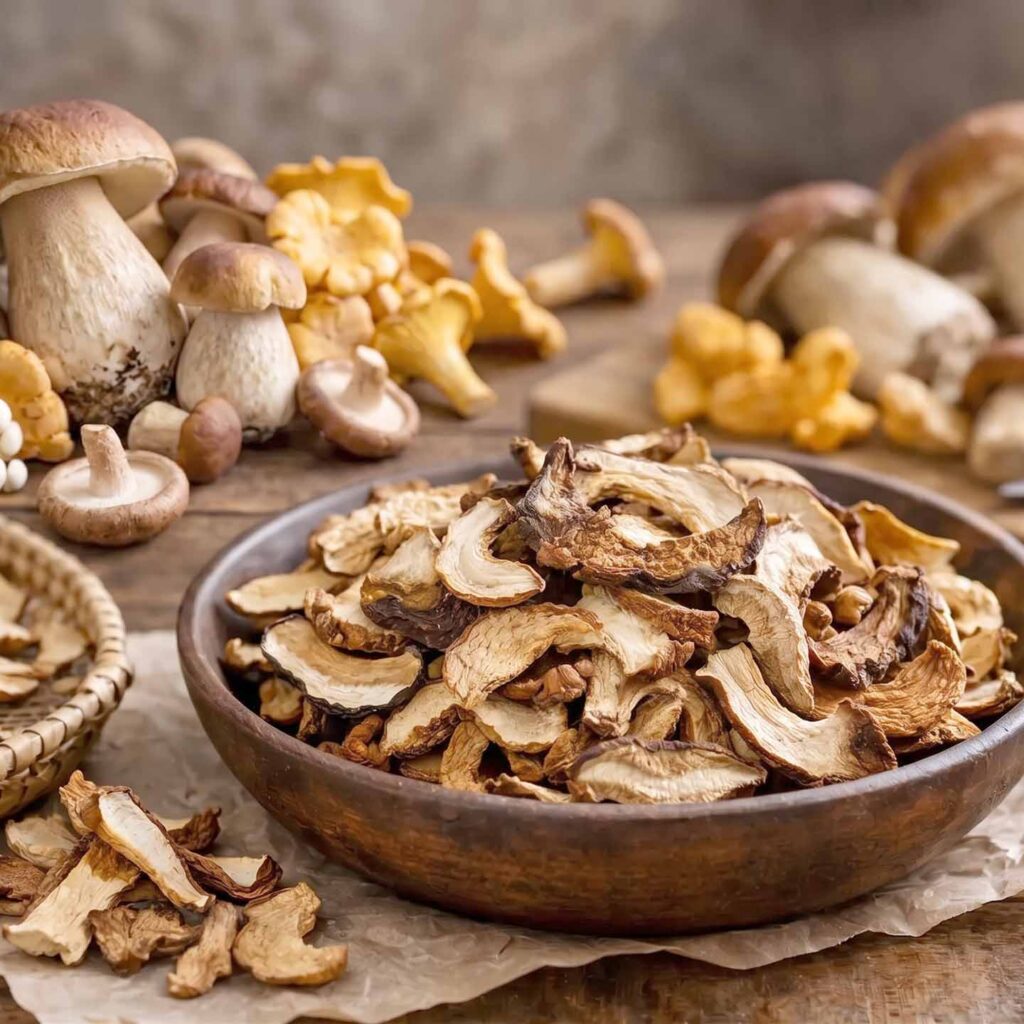
A basket of mushrooms picked at just the right time retains an intense aroma of the earth and the woodland, but it is also extremely delicate: a matter of hours can mean the difference between a prized ingredient and something that has to be thrown away. Knowing how to dry mushrooms It means taking action at just the right moment, whilst they are still fresh, firm and full of flavour, gradually removing the water to preserve their character, natural colour and every possibility for future use.
Drying is not merely a preservation technique handed down through our traditions. It is a practical, artisanal way of respecting the seasons, making the most of a bountiful harvest and embracing the philosophy of combating food waste. From porcini to chanterelles, from shiitake to cultivated button mushrooms, every mushroom processed to the highest standards can return to your kitchen even after many months, it is still ready to lend an authentic depth of flavour to stocks, risottos, fillings, sauces and dressings, whilst retaining all its organoleptic properties.
Rule number one: choose mushrooms that are safe and undamaged
Only mushrooms that are definitely edible and have been identified with absolute certainty should be dried. Drying removes the water, but it does not in any way eliminate toxins nor does it render a poisonous species harmless: if you have any doubts about your wild harvest, you must always consult a competent mycological service; never rely on the mushroom’s outward appearance or a simple photographic comparison.
Choose fresh, firm specimens with no soft patches, suspicious marks or unusual odours. Mushrooms that are overripe, have been exposed to rain for several days or are already starting to deteriorate will not improve if placed in a dehydrator: rather, they tend to lose their structural quality, making it much more difficult – if not impossible – to preserve them reliably over time.
Timing is crucial when it comes to preventing enzymatic deterioration. After harvesting or purchasing them, clean them and start the process as soon as you can. Leaving them sealed in a bag for too long encourages condensation to form and accelerates the onset of deterioration – a particularly high risk with meatier varieties of mushroom.
How to clean and slice mushrooms for drying
To dispel a widespread but unfortunate urban myth, it is important to make it clear that mushrooms, like any other fruit or vegetable, must be washed. Do not perpetuate the myth that dry brushing is sufficient: a quick, gentle wash in cold water is all that is needed to effectively remove soil, pine needles, pests and forest debris. The key point is to dry them immediately afterwards with a clean cloth, avoiding leaving them to soak, as their spongy texture would absorb excess liquid, prolonging the preparation time. Then trim the base of the stem to remove any tough or damaged parts.
The cut must be perfectly even, as slices of very different thicknesses dry at different rates, resulting in inconsistencies within the batch. For porcini, button mushrooms and similar varieties, a consistent thickness of around 3–5 millimetres is the ideal starting point. Small mushrooms can be used whole or simply halved; large ones should be sliced evenly, including both the cap and the stem where both are healthy and firm.
Never stack the slices on top of one another in the baskets. Each piece must be able to receive a free and continuous flow of air: it is precisely this smooth circulation, even more so than the set temperature alone, that ensures the process is consistent and effective.
Temperature and airflow: the key to success
To process mushrooms, a warm, constant and carefully controlled environment is required, whilst avoiding any excessive heat. Generally speaking, the process is carried out at moderate temperatures, ranging between 40 and 50 °C. Excessively high temperatures, in fact, would risk cooking the flesh superficially, altering the precious, heat-sensitive flavour profile or causing the outer structure to stiffen before the internal water has had a chance to evaporate properly.
A horizontal, unidirectional airflow system such as that designed by Tauro Essiccatori is the ideal solution, as it directs the air across the shelves in a parallel and constant manner. This physical principle ensures that every single slice is exposed to the same intensity of airflow, helping to achieve perfectly even drying without you having to constantly move or reverse the trays. In these systems Biosec domestic dehumidifiers, the horizontal ventilation system, combined with the DrySet Pro electronic motor, is specifically designed to guide the food through a controlled process. For example, by selecting the P2 programme – specifically designed for mushrooms and thin slices with a maximum temperature of 50°C – you will fully preserve the product’s organoleptic characteristics and enzymes.
Using a traditional oven is a complex process fraught with pitfalls, as it traps moisture and makes it difficult to maintain a sufficiently low and stable temperature. Outdoor drying, on the other hand, exposes your harvest to night-time damp, dust, insects and changes in the weather: a method that may be part of traditional wisdom, but which today offers decidedly inadequate control over the final result.
How long does it take to dry mushrooms?
There is no single, mathematically exact time for every harvest. Thin slices of less watery varieties may be ready in a few hours; thicker porcini, whole mushrooms or those harvested on particularly damp days will, by their very nature, take longer. The process can take between 6 and 18 hours, but the timer provides only a rough guide, not the decisive factor.
The correct way to check this is by looking at and touching the slice. The inside must be completely free of water, light in texture and clean. The thinner parts tend to snap, making a crisp sound when bent, whilst the slightly thicker sections may retain a little flexibility, but must never feel cold, damp or rubbery in the centre. If a piece leaves a damp sensation between your fingertips, it needs more time. Extend the process gradually: any residual moisture inside, however slight, can compromise the shelf life of the entire jar.
The perfect packaging to keep it crisp
Once the cycle is complete, a crucial technical step comes into play for anyone seeking an excellent product. Contrary to what one might think, if the product has been thoroughly and effectively dried, packing it into jars whilst it is still hot – taking it directly from the baskets – ensures that its crispness is preserved to the full. The porous structure of the mushroom, in fact, tends to act like a sponge: if left to cool in the open air, it would immediately reabsorb any residual moisture from the environment, losing its fragrance. The residual heat from a fully dehydrated product will not cause condensation to form inside a hermetically sealed jar, but will ensure perfect protection from external moisture.
Preservation: safeguarding the work carried out
Mushrooms should be stored away from air, direct sunlight, sources of heat and ambient moisture. Traditional glass jars with airtight screw-top lids or gaskets are excellent, eco-friendly and safe options, provided they are washed and thoroughly dried. Labelling each jar with the species, the processing date and, where applicable, the batch number or the place of collection is an organisational practice that helps you use up older stocks first and keep track of the seasonality.
A cool, dry and dark place, such as a closed sideboard or a larder, best preserves the natural colour and volatile aromas. Avoid placing your jars near hobs, dishwashers or windows exposed to direct sunlight. For those running farms, agritourism businesses or small craft workshops, organising stock into measured portions helps to avoid constantly opening the main containers, allowing you to manage stock rotation in an orderly and professional manner.
Common mistakes when drying mushrooms
The first technical mistake is to overload the shelves by stacking the slices on top of one another. Air must be able to flow freely between one slice and the next: piling up the raw material to save space blocks ventilation, drastically slows down evaporation and creates damp patches. The second mistake is to cut the slices unevenly, alternating between almost transparent sections and coarse cuts. The third is impatience: using excessive heat in an attempt to finish sooner, thereby irreparably spoiling the woody flavour.
Failing to carry out the correct initial washing process, or starting with raw materials that are already beginning to deteriorate, also drastically reduces the value of your work. Natural and effective drying requires just a few simple steps, but they must be carried out with care: high-quality raw materials, consistent thicknesses, constant air flow and prompt packaging.
The expert’s tip: perfect rehydration and waste recovery
To restore your mushrooms to their ideal texture without losing their flavour, soak them in lukewarm water (between 30 and 40 °C) for about 20–30 minutes. Avoid boiling water, as this risks overcooking the fibres and making them tough. Once rehydrated, gently squeeze out the excess water. The real secret lies in the soaking water: strain it through a very fine-mesh sieve or clean muslin to remove any earthy residue, and use it as an unbeatable liquid base for thickening your risotto or extending your sauce. Furthermore, never throw away the crumbs, the less attractive parts or the fragments left at the bottom of the jar. Put them into a clean spice grinder and grind them to a powder: you’ll get a pure mushroom flour, an extraordinary natural flavouring to be added dry directly to dough for bread and fresh pasta, or as a finishing touch to cream soups and fondues.
How to use dried mushrooms in cooking
Once rehydrated, dried mushrooms are incredibly versatile in the kitchen. They can be added directly to dishes that require prolonged cooking and contain plenty of liquid, such as rich stocks, vegetable ragù or stews, absorbing moisture as they cook and imparting depth of flavour. The powdered form mentioned earlier transforms them into a natural “umami” concentrate, perfect for making aromatic salts or flavouring compound butters.
Following the stages of this process means preserving the bounty of a season without altering its essence. When the process is carried out with artisanal skill, every jar you store in your larder holds much more than just an ingredient: it encapsulates the value of your labour, the unmistakable aroma of the local area and the conscious choice to cook without waste.
Discovering the world of Tauro Essiccatori means placing your trust in over thirty years of research – proudly “Made in Italy” – dedicated to food preservation. Through reliable technologies designed to enhance the natural qualities of products, transforming the abundance of your harvests into precious resources to be enjoyed all year round becomes an experience accessible to everyone, whilst fully respecting the environment and our great culinary tradition.
 Italian
  English
  German
  Spanish
  French
  Romanian