




Advantages of low-temperature drying
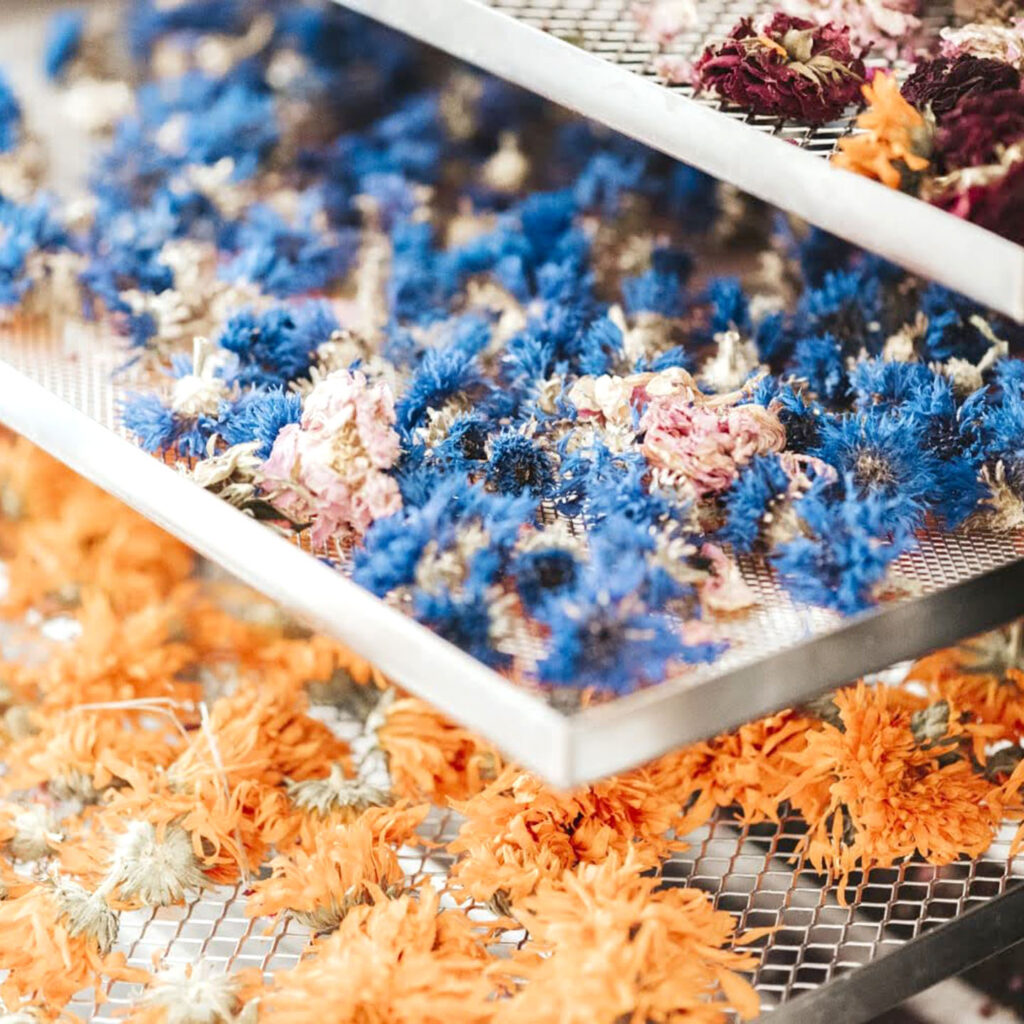
When a seasonal strawberry loses water without being stressed by excessive heat, it does not just stay drier, but remains perfectly recognisable. The scent, colour, cell structure and authentic character of the fruit are preserved in a completely different way than with more aggressive heat treatments. It is precisely from this scientific and gastronomic evidence that we should start in order to fully understand the advantages of low-temperature drying, both in the home cooking either within a craft workshop or of a’farm.
Talking about conscious dehydration does not simply mean finding a way to preserve a foodstuff for longer. It means consciously choosing how to take the raw material from a fresh product to a stable, practical, safe and highly concentrated ingredient, without distorting its original qualities. For people who work daily with fruit, vegetables, herbs, mushrooms or dedicated food preparations, temperature management is not a mere technical detail of secondary importance, but a strategic decision that has a direct and definitive impact on the quality of the final product.
Why low temperature makes a difference
Drying has as its fundamental principle the progressive removal of the free water contained within foodstuffs. This process drastically reduces water activity, blocking the proliferation of microorganisms and slowing down degradation processes such as mould formation or enzymatic oxidation. However, the way in which this evaporation is induced determines the success of the whole operation.
If the air temperature is too high, the food dries out too quickly on the surface, creating a barrier that traps residual moisture in the core of the product. This causes browning, changes in the natural colour and a hidden perishability: the product looks ready, but inside it has not reached the stability necessary for a long shelf life in the pantry.
For some products, working at a low temperature, typically between 20 degrees and 45 degrees, allows gradual, harmonious and controlled evaporation. Moisture migrates from the centre outwards without trauma to the cellular structure of the raw material. This delicacy translates into perceptible quality at first glance: the colours remain vivid, the aromas intense and the organoleptic properties unaltered.
In a horizontal airflow system with eltrronic temperature and humidity control, such as the one developed by Tauro Dryers with Biosec technology, the air flows through the trays in a perfectly uniform way from the back to the front. This linear, unidirectional movement is decisive because it ensures that every single tray receives the same ventilation. As a result, the need to periodically reverse or rotate the racks during the work cycle, a typical limitation of the old vertical tower systems where the top racks always dry last, is totally eliminated. When the air flow is homogeneous and constant, the effectiveness of low temperature is expressed to its full potential.
The main advantages of low-temperature drying
The first and most obvious benefit lies in the strict preservation of the sensory qualities of the food. The original aromas, natural colours and complex flavour profiles remain true to the fresh raw material. A properly treated apple slice should not take on unnatural cooked or caramelised notes. An aromatic or medicinal herb must not lose its volatile essential oils due to high heat.
From a nutritional point of view, gentle drying perfectly meets the needs of those who follow a conscious diet or specific diets such as crudism. Keeping the food temperature below the critical threshold of 42 or 45 degrees preserves thermolabile enzymes, vitamins and minerals intact. This does not mean that every single substance remains mathematically unchanged, since the end result always depends on external factors such as the type of food, the thickness of the cut, the overall duration of the cycle and the correct management of room ventilation. It does, however, mean operating according to a rule of profound respect for the biological integrity of the food.
A further practical implication is related to aesthetic performance, a factor of great relevance for both home production and commercial positioning in the professional sphere. Slices of fruit that retain their original colours, dehydrated vegetables that retain the legibility of their original shape, flowers and herbs that do not appear dull or yellowed significantly enhance the perceived value of the finished product. Whether the ingredient is destined for direct sale or used to enrich dishes in the catering industry, visual impact is the first vehicle of quality.
Consistency and texture are another key point of product development. By means of a temperature-controlled process, balanced and crumbly textures are achieved, excluding the risk of residual internal moisture. This precision is crucial for delicate products such as the saffron, pantry-ready porcini mushrooms, herbal tea blends, sophisticated edible decorations or technical ingredients ready for quick rehydration in the kitchen.
Practical advantages in the home: seasonality, pantry and less waste
In domestic use, the choice of temperature-controlled dehydration offers concrete solutions to accommodate the natural rhythm of the seasons. When the home garden offers abundant harvests, when the local market offers perfectly ripe fruit at affordable prices, or when one finds oneself managing daily surpluses that could not be consumed fresh in the short term, the dehydrator becomes a strategic tool for the family economy.
It is not simply a matter of extending the shelf life of a food to avoid throwing it away. It means turning a potential surplus into a stable and environmentally friendly gastronomic resource. Courgettes, apples, apricots, wild mushrooms, herbs picked at peak bloom, tomatoes or untreated citrus peels can enter the pantry permanently with a distinct culinary identity. This technology makes it possible to do so while occupying up to eighty or ninety per cent less space than fresh produce, without the need for cold rooms or freezers that require continuous energy consumption.
This approach reduces food waste in a systematic and measurable way. A crate of very ripe figs, a bountiful harvest of medicinal plants or fruit about to pass the ideal point of ripeness are valued rather than discarded. It becomes a gesture of respect for agricultural labour and the intrinsic value of the plant raw material.
Professional advantages: continuity, standards and product value
For a farm, a farmhouse, a processing laboratory or a catering and hospitality business, the benefits of controlled drying translate directly into process optimisation and business profitability. Dehydrating with professional criteria makes it possible to absorb seasonal production peaks, diversify the sales catalogue, create new product formats and stabilise ingredients with an extremely short shelf life.
Achieving a consistent quality standard is central to every company. A perfectly uniformly dried end product is easier to store, package, dose or incorporate into complex mixtures and recipes. Whether producing crispy fruit chips, dehydrated vegetables for ready-made soups, medicinal herbs for the herbal sector, ingredients for baking or preparations for the natural pet food, the regularity of the end result is just as important as the quality of the raw material.
The quality aspect directly supports brand identity and positioning in the market. A dehydrated foodstuff that preserves its recognisable colour, original scent and clean aroma reinforces the end consumer's perception of excellence. For many artisanal realities that base their proposal on the values of short supply chain, naturalness and respectful processing, this factor constitutes a real element of differentiation from mass industrial production.
Low temperature does not mean improvisation
It is essential to emphasise a firm point: the adoption of low temperature does not coincide with a random reduction in temperature degrees combined with empirical time management. Each type of food requires a precise and scientific calibration between the operating temperature, the thickness of the slice cut, the arrangement of the load on the shelves, the specific starting humidity and the overall duration of the cycle.
An aromatic plant with a thin, delicate leaf expresses profoundly different needs than an apple slice or a fleshy, fibre-rich mushroom. The level of ripeness and the concentration of natural sugars or pectins also change the physical parameters of the process. The richer the raw material is in water or complex sugars, the more it requires careful monitoring and the application of a structured method.
For this reason, the dryer's construction quality and airflow management determine the final result. The electronic control system for both domestic and professional applications developed by Tauro offers a range of preset and customisable programmes designed specifically for each application.
What changes in flavour and aroma
Many people initially approach drying driven solely by the need to preserve food. However, from the very first cycles of use, one experiences how the real added value lies in the extraordinary concentration of flavour. As the percentage of water decreases, the natural flavour profile intensifies. When the process is conducted without thermal stress, this concentration does not alter the nature of the flavour profile, but enhances its most authentic expression.
This explains why a correctly dehydrated banana expresses the typical flavour of the fresh fruit, a slice of apple retains its specific acidulous or sweet note depending on the variety chosen, a tomato retains its organoleptic complexity intact and a sprig of rosemary releases clear and persistent olfactory notes. Conversely, when excessive or unregulated heat is used, as is often the case in traditional domestic ovens or industrial plants that accelerate processes, there is a serious risk of flattening the aromas or generating unpleasant cooked or bitter notes.
This quality balance responds perfectly both to the needs of the enthusiast in the kitchen and to the operational needs of professionals. It provides ingredients with a crisp, clean and readable flavour profile, suitable for enhancing any gastronomic preparation or for structuring coherent commercial product lines.
A choice consistent with quality and sustainability
The adoption of low-temperature drying brings with it a profound cultural and value dimension. It means operating according to a logic of long-term valorisation, rejecting the rapid exploitation or qualitative degradation of food. It means recognising seasonality not as an insuperable limit to production, but as a precious resource to be intelligently planned and managed.
Drying naturally, consciously and supported by the right technology makes it possible to safeguard harvests at times of maximum abundance, ensuring continuity in the use of seasonal products throughout the year and drastically reducing the share of waste. This is real and concrete sustainability, made up of home or business planning, systematic reduction of waste and absolute attention to the real nutritional value of what we consume.
Technology expresses its highest meaning when it places itself entirely at the service of the raw material. A dryer designed with rigorous criteria is not intended to replace the experience or sensitivity of the person using it, but to make its action effective, repeatable and safe over time. It is in this precise context that the experience of over thirty years of a specialised brand such as Tauro Essiccatori, deeply rooted in the Made in Italy manufacturing tradition and Veneto craftsmanship, finds its most authentic expression: accompanying professionals and enthusiasts towards a superior drying method.
Choosing low temperature is ultimately a form of profound respect. Respect for the product harvested at the perfect moment of its ripeness, respect for the agricultural work expressed throughout the supply chain, respect for the health of those who will consume the food and respect for the very idea of food processing conducted in a workmanlike manner.
If you would like to learn more about the endless applications of food dehydration and discover the full range of our horizontal flow drying systems, explore the technical content and recipe books shared on the official Tauro Dryers website.
 Italian
  English
  German
  Spanish
  French
  Romanian