




How to dry citrus fruits for decorations without making any mistakes
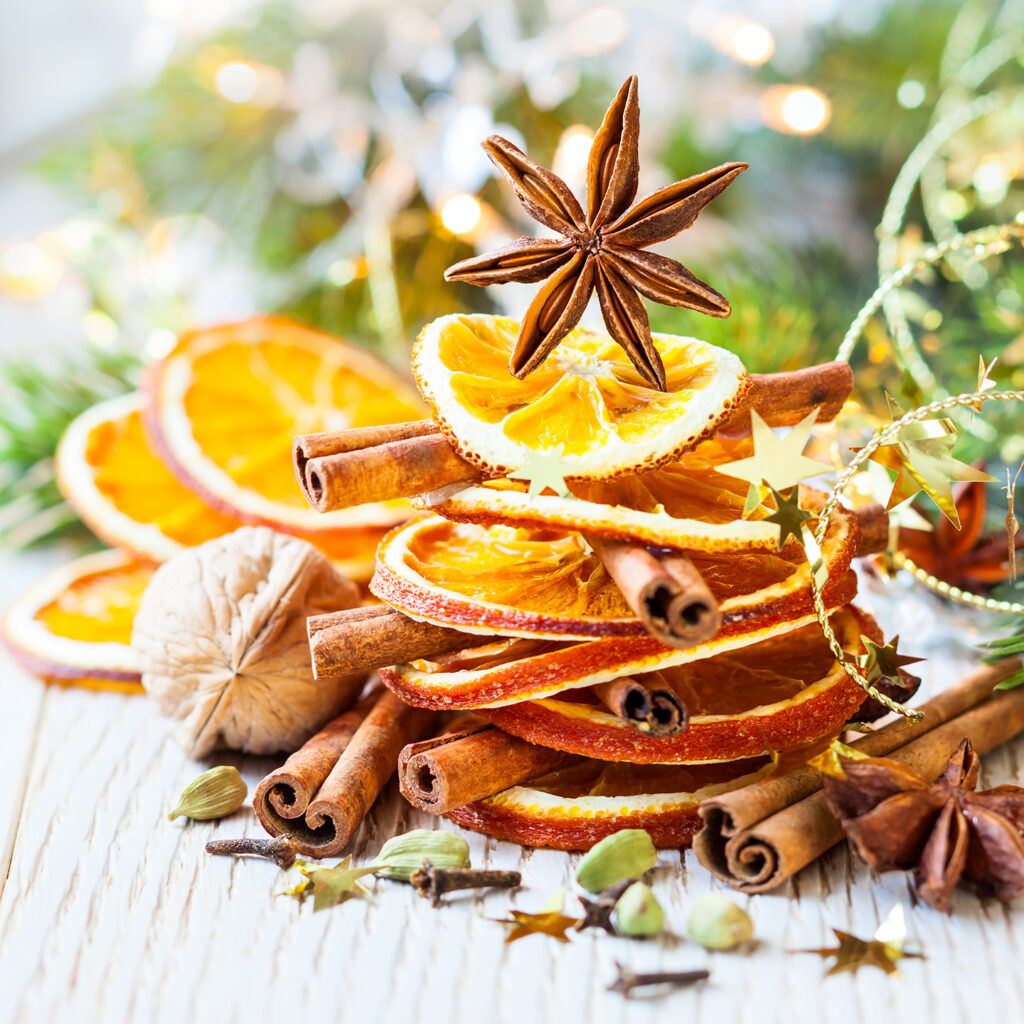
A well-dried slice of orange retains a warm, translucent and vibrant colour, with segments that look like small amber-coloured stained-glass panes capable of capturing natural light. A poorly dried slice, on the other hand, may darken due to uncontrolled thermal oxidation, warp irregularly or retain residual moisture at the centre of the flesh, compromising its integrity and leading to the development of mould within a few weeks. Understanding how to dry citrus fruits for decoration It therefore means taking great care with the raw material, the cut and the evenness of the air: three simple details that make the difference between a fleeting ornament and a lasting decoration to be cherished for years to come.
Oranges, lemons, grapefruit, mandarins, bergamots and limes bring the most authentic touch of the winter season into the home. Whether used in floral garlands, paired with spices such as cinnamon and star anise, tied to evergreen branches, used as handmade Christmas gift tags or hung in front of winter windows, these fruits allow you to create natural, cosy and personalised decorations. Drying is also an eco-friendly and conscious choice: it makes the most of seasonal citrus fruits, including those with imperfect skin or irregular shapes that are unsuitable for the table, transforming surplus produce into creative resources without waste and without compromising on aesthetics.
Choosing the right citrus fruits before drying them
The quality of the final result always begins with the careful selection of the fruit. To obtain even, consistent slices, choose citrus fruits that are firm, compact to the touch and free from deep bruises, soft patches or signs of mould. The peel must be intact and rich in essential oils, as in decoration the peel and the albedo (the white part underneath) play a vital role in supporting the contraction of the flesh during dehydration. An orange with pigmented flesh, such as the ‘tarocco’, will impart ruby-red hues, whilst blonde varieties will offer warm, golden highlights; a lemon with thick peel will ensure a sharp contrast between the outer rind and the transparency of the segments.
Before cutting, it is essential to ensure the raw ingredients are clean. As with any other gift of the earth, from mushrooms foraged in the woods to vegetables from the garden, citrus fruits must also always be washed thoroughly under cold running water to remove dust, soil and surface residues, dispelling the misconception that produce intended for drying should never come into contact with water. After washing, dry them thoroughly with a clean, natural-fibre tea towel to prevent external moisture from causing water marks during the early stages of the process.
Each variety has its own distinct structural characteristics:
- Oranges: they offer the perfect balance between diameter and structural integrity, making them ideal for centrepieces, garlands and Christmas tree decorations.
- Lemons: their bright yellow colour brightens up winter arrangements, whilst retaining a very stable round shape.
- Grapefruit: thanks to their generous size, they make for striking visual displays, although they do take a few extra hours to dry due to the high water content in the segments.
- Mandarins, clementines and kumquats: perfect for small, delicate decorations, table place cards and delicate garlands.
- Lime: these offer an elegant and sophisticated moss-green hue, which contrasts perfectly with red berries and natural pine cones.
How to dry citrus fruits for decoration: cutting and preparation
To achieve perfect slices, precision is key. Use a very sharp knife with a smooth blade or a manual slicer, cutting the fruit across the segments to reveal the classic radial pattern inside. The ideal thickness should be between 5 and 7 millimetres: slices thinner than 4 millimetres tend to become as brittle as parchment and are likely to tear in the middle; slices thicker than 8 millimetres take an excessively long time to dry and tend to retain moisture near the peel.
Consistent thickness across the slices placed on the same shelf is the technical parameter that ensures simultaneous and predictable drying. Slices of varying thicknesses exposed to the same airflow will behave differently: the thinner ones will complete the cycle prematurely, whilst the thicker ones will remain partially damp. If you are preparing mixed batches, organise the baskets by grouping together fruit of the same type and size.
Immediately after cutting, place the slices on kitchen paper and gently pat the surfaces dry without squeezing the flesh. This removes the free juice on the surface released when the vesicles burst during cutting, reducing the initial stickiness and helping the evaporation process to start quickly. It’s not a mandatory step, but it might help!
The tops of citrus fruits should never be wasted. Even without their decorative central segments, they can be dried to make aromatic potpourri (a brilliant idea for homemade, personalised Christmas gifts), used to decorate rustic bowls, or turned into precious scented powders. Respect for food also lies in the ability to make the most of every single part of the raw ingredient.
The dryer: a constant air flow and more consistent results
To produce decorations that retain their vibrant colours, geometric lines and authentic scent over time, the electric tunnel dryer with horizontal, unidirectional airflow is the most reliable and effective technical solution. Unlike a domestic oven, which operates by static heat accumulation and struggles to expel water vapour, the dryer operates by means of continuous, temperature-controlled ventilation.
In Tauro Essiccatori’s Biosec dryers, which have been designed and manufactured with artisanal care in Veneto for over 30 years, the unique unidirectional horizontal airflow system ensures that hot air flows across the shelves in a parallel and constant manner. Each basket receives the same volume of air, allowing all the slices to lose moisture at the same gradual rate. This fluid dynamics principle eliminates the need to constantly reverse the position of the baskets or turn the slices during processing, ensuring perfectly uniform dehydration whether it is a natural drying both for domestic use and for products intended for creative workshops.
Arrange the slices on the racks, leaving a few millimetres’ space between them, and taking great care to ensure they do not overlap at all. Air must be able to circulate freely over the entire surface of each slice. To handle citrus fruits more effectively – as they contain natural fructose and may stick to the racks whilst drying – it is advisable to use specific non-stick trays such as DrySilk Net micro-perforated netting, which allow the flow to pass freely whilst ensuring an immediate and clean separation.
With regard to the operating parameters of Biosec systems fitted with DrySet Pro electronic technology:
- To keep the colour vibrant and bright and prevent heat-induced browning, the recommended programme for citrus fruit slices is programme T5 set to 55–60 °C, or the P1 Automatic programme (55 °C) with an average duration of 18–24 hours.
- If you want the slice to dry out particularly quickly so that its structure sets rapidly, you can use the P4 Superhot programme at 68 °C for the first 14–18 hours, whilst keeping an eye on the progress of the process.
The total time required varies depending on the variety’s initial water content, the thickness of the slice in millimetres, and the ambient humidity of the surrounding environment. The slice is ready when it feels dry and firm to the touch, is light in weight, and the segments display a characteristic glassy transparency, free from any dark or soft patches.
Oven, radiator or the open air: when to use them
Understanding the limitations of alternative methodologies helps us to appreciate the value of a controlled technological process.
Domestic ovens present significant challenges in terms of temperature control: most ovens are unable to maintain temperatures consistently below 70–80 °C. Excessive heat triggers the caramelisation of sugars and the degradation of natural pigments, irreversibly darkening the flesh and transforming the bright yellow of lemons or the vivid orange into a dull brown. Furthermore, air circulation is often insufficient to disperse the enormous volume of water vapour released by the citrus fruits, forcing the oven door to be left ajar, resulting in energy loss and high electricity consumption.
Drying on a radiator is a slow and uncontrollable, trial-and-error process. The lack of forced ventilation means that evaporation is extremely slow; the part in contact with the heat dries out whilst the upper surface remains exposed to the damp air in the room, causing the slice to warp significantly and increasing the risk of invisible mould even before the fruit is dry.
Finally, outdoor cleaning is not feasible during the autumn and winter months, which is the citrus harvest season. Low temperatures and high relative humidity prevent free water from evaporating, whilst atmospheric dust and insects irreparably compromise the cleanliness and hygiene of the ornament.
How to keep colours and scents fresh
The beauty of a plant-based decoration lies in its visual and olfactory fidelity to the original fruit. The gentle, constant heat of the horizontal-flow dryer inactivates the polyphenol oxidase enzymes responsible for the browning of plant tissues without altering the carotenoids and anthocyanins that give the fruit its characteristic vibrant colours. The orange will take on a warm amber hue, the lemon will retain its golden lustre and the grapefruit will preserve its pinkish veins.
The aromatic qualities are also preserved with remarkable fidelity: the oil glands in the peel contain terpenes and aromatic compounds which, as they are not destroyed by high temperatures, remain trapped within the dry structure of the peel. When the slices are placed around the home or combined with traditional spices such as cloves, cinnamon sticks or star anise, they will gradually release a delicate and lingering natural fragrance.
Once dry, always protect your arrangements from direct exposure to ultraviolet sunlight, which can cause the plant pigments to fade over time, and keep them away from sources of direct steam such as cookers or damp bathrooms.
Practical ideas for using them in decorations
The versatility of dried citrus slices means they can be used to enhance a wide range of handcrafted items:
- Hanging decorations: make a small hole in the translucent flesh just beneath the bark using an awl or a wool needle, and thread through some raw jute twine, velvet ribbon or natural raffia to hang the slices on the Christmas tree or on window handles.
- Garlands and festoons: string the discs together, alternating them with dried bay leaves, noble fir twigs, preserved eucalyptus and cinnamon sticks tied at regular intervals.
- Centrepieces and place cards: arrange the slices on ceramic plates or wooden trays alongside natural pine cones, walnuts in their shells and candles protected by glass cylinders. A single slice tied to a napkin with a sprig of rosemary makes for a cosy and fragrant place card.
- Zero-impact gift wrapping: swap synthetic ribbons and plastic bows for tan wrapping paper, natural twine and a slice of dried orange or lemon: your gift will instantly take on a handcrafted, elegant and environmentally friendly look.
The Tauro expert's trick
If, whilst preparing them, you are left with citrus fruit tops or irregular slices that you do not intend to hang up, do not throw them away: cut them into small pieces and dry them along with the rest of the batch until they are completely brittle.
Once they have been dried, place these pieces in a coffee grinder or a small food processor and grind them into a very fine powder. You will end up with a pure, intensely fragrant citrus flour:
- In the kitchen: you can use it to flavour shortcrust pastry, ciambellone cakes and rustic biscuits, or mix it with coarse salt to create a refined citrus-flavoured salt for meat and fish. Please ensure that the raw material is strictly organic and fit for human consumption.
- For the home: mix it with bicarbonate of soda to make natural air fresheners for wardrobes and chests of drawers, or add it to black tea blends for a citrusy drink with a wintry flavour.
If you wish to give your decorative slices a particularly firm texture and a glossy finish similar to a natural glaze, run the P4 Superhot programme at 68 °C during the final hour of cooking: the rapid evaporation at the end will crystallise the sugars on the surface, giving the slice a pleasing structural firmness.
Mistakes that shorten the lifespan of decorations
The longevity of a floral arrangement depends on each stage being carried out correctly:
- Remove the product when it has reached the correct level of residual moisture: when you touch the centre of the slice, it should not feel soft or damp and cold to the touch. If the slice bends too easily at the centre, extend the drying time by a few hours. Prolonged drying will not cause the product to burn in a Tauro dryer, whilst premature removal will result in mould.
- The myth of air-cooling before packaging: many people mistakenly advise leaving the slices to cool in the open air before storing them. This is a significant technical error: a fully dried vegetable product is highly hygroscopic and begins to reabsorb moisture from the surrounding air within a matter of minutes, losing its firm texture. To keep the slices you are not using straight away in perfect condition, place them in clean, dry glass jars whilst they are still warm, straight out of the dehydrator, and seal the screw-top or lever-lock lid immediately. In this way, the slices will cool down within a protected microenvironment, retaining their optimal dryness for over a year.
- Careless use of hot chemical glues: when assembling the decorations, secure the slices preferably with mechanical fasteners, copper-coated florist’s wire or twine. Heavy use of hot glue directly on the sugary flesh can leave dull marks and affect the transparency of the segments.
Nature’s imperfections are part of what gives a handmade object its value: a peel with irregular veins or a unique colour variation tell the story of the land, the seasons and the patience involved in the artisanal transformation process.
Mindful drying: the art of recovery
The drying of citrus fruits embodies the very essence of the culture of preservation: a technique that combines traditional know-how, plant engineering and a deep respect for the raw plant material. Transforming winter fruits into long-lasting decorative items allows us to rediscover the value of simple, handmade things, reducing waste and bringing the authentic scent of nature into our homes.
For over thirty years, Tauro Essiccatori has been developing solutions at its headquarters in Camisano Vicentino for those who view drying as a daily passion or a professional opportunity. From the versatility of the Biosec domestic range to the efficiency of the B.Master professional systems, every one of our appliances is built in accordance with the principles of ‘Made in Italy’ excellence, energy efficiency and long-term reliability.
 Italian
 English
 German
 Spanish
 French
 Romanian