




How to dry persimmons: crisps, times and temperature
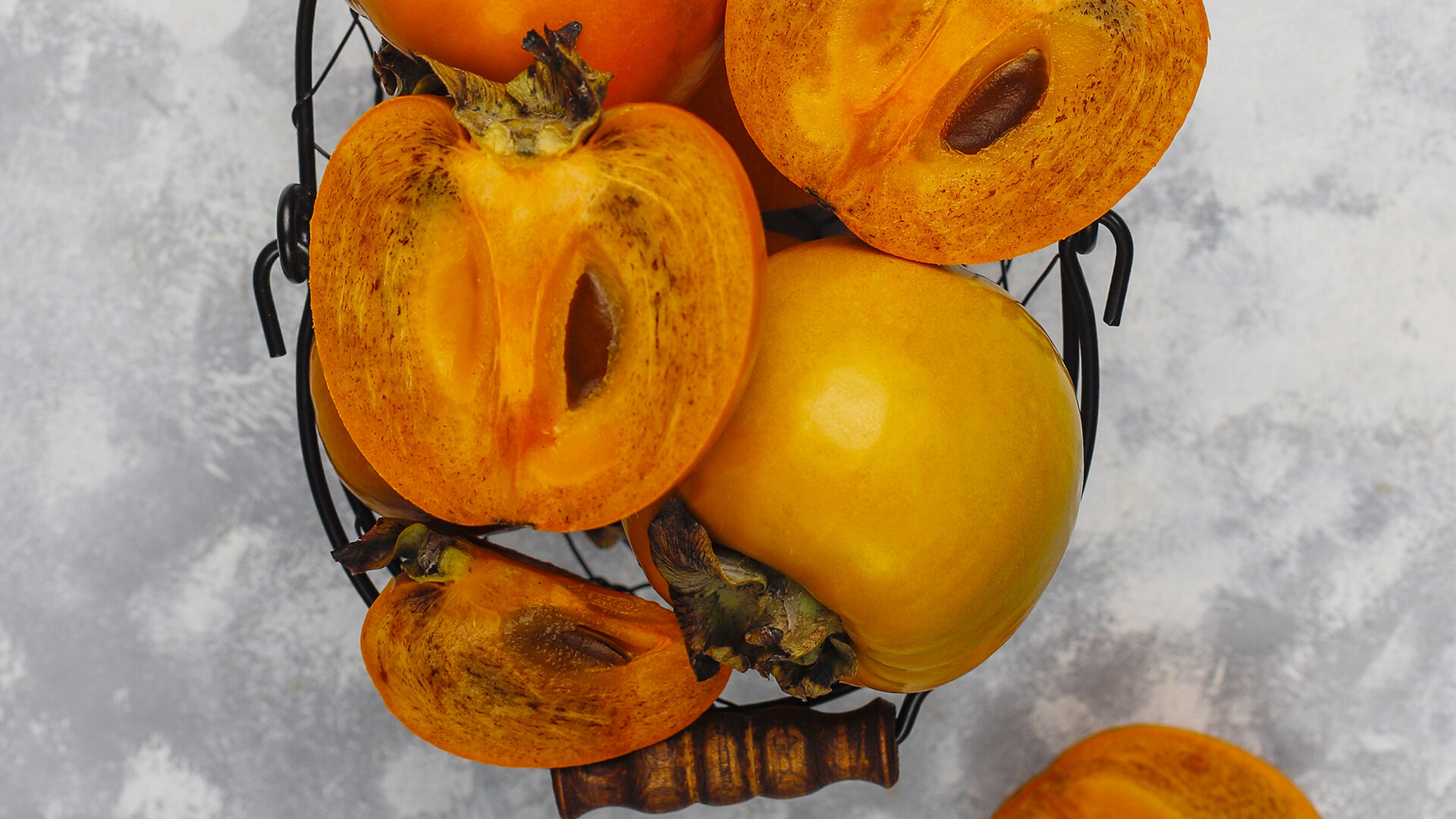
Autumn brings with it warm colours and intense aromas. Among the most iconic fruits of this season are persimmons, which are sweet and perfect for enjoying fresh or turning into dried persimmons.
In this guide, you’ll find out How to dry persimmons at home with Biosec, which fruits to choose, how to cut them, which programme to use and how to store them once they’ve been dried. We’ll also look at how to use overripe persimmons to make fruit leather and homemade bars.
Why dry persimmons
Drying persimmons allows them to be kept for longer, whilst naturally concentrating their sweetness and flavour. The dried persimmons They are a natural snack that can be eaten on their own or used to enhance desserts, yoghurt, muesli and energy bars.
Drying is also an excellent way to make the most of a bountiful harvest and reduce waste: even fruit that is now too ripe to be sliced can be turned into purées, fruit leather or other dried products.
Choosing the right persimmons for drying
- Would you prefer firm persimmons, which are easy to cut into even slices. Apple persimmons are particularly suitable as they are sweet even when the flesh is still firm.
- Other varieties can also be dried before they become too soft. As they dry, they gradually lose their characteristic astringency.
- Fruit that is too soft or very ripe can, on the other hand, be puréed and used to make fruit leather or dried fruit bars.
- To slow down the ripening of fruit that you want to keep for a few more days before drying, keep it away from apples and quinces.
Fruit preparation
- Wash the persimmons under running water.
- Dry them well with a clean cloth.
- Remove the stalk and the upper cap.
- Remove any seeds. There is no need to peel the fruit before drying them.
Cutting persimmons
- Use a sharp knife or a mandoline to cut even slices.
- Cut the persimmons into slices about 5–6 mm thick, as also stated in the Biosec Manual for Fruit Drying.
- Try to keep the slices of a uniform thickness: slices that are similar in thickness will dry to the same degree more easily.
- Fruits that are still firm are easier to cut without breaking them.
- If the persimmons are too ripe to slice, blend them and use them in alternative recipes such as fruit leather or energy bars.
Arrangement in trays
- Arrange the slices in a single layer, without overlapping them, to ensure proper air circulation.
- As persimmons are high in sugar and can stick to the trays whilst drying, you can use DrySilk Net, the Biosec non-stick mesh, which is particularly suitable for thin, sticky foods that do not release liquids.
- If, on the other hand, you are working with very ripe persimmons, purées or more watery mixtures, use DrySilk, the continuous non-stick sheet, which is also suitable for foods that might drip.
- With the Biosec dryers There is no need to constantly swap the position of the baskets: the horizontal airflow reaches all the different levels of the dryer at the same time, ensuring uniform drying.
Drying persimmons
- With Biosec, use the P2 programme – Mushrooms and thin slices, designed for food cut into slices approximately 4–6 mm thick and with a maximum temperature of 50 °C.
- Programme P2 has a preset duration of 18 hours, including a final maintenance phase, but The time required always depends on the product: The variety of persimmon, ripeness, thickness of the slices, quantity loaded and moisture content can significantly affect the times.
- You should therefore check the result during the cycle, particularly from the first 12 hours onwards, without treating the specified time as a strict guideline.
- The slices are ready when their surface is dry and there are no damp patches. As these fruits are high in sugar, they may remain slightly soft and pliable even after being properly dried.
Which dehydrator should I use to dry persimmons?
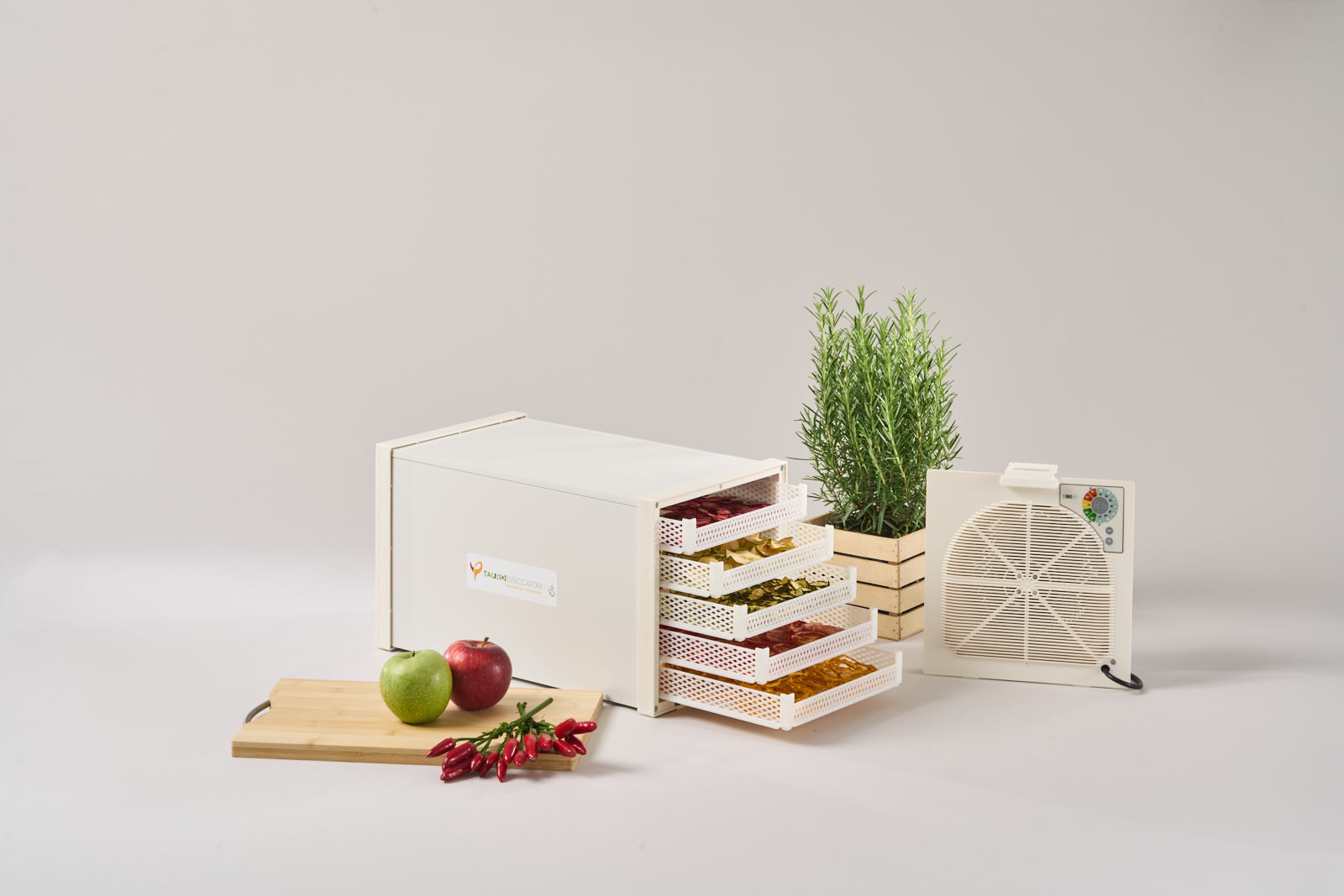
You don’t need a large dehydrator to dry persimmons at home. For normal household quantities, Biosec Domus B5 It has 5 trays and an approximate capacity of 2–3 kg: it is therefore already suitable for making persimmon crisps and other dried fruit.
If, on the other hand, you have a bountiful harvest or want to process more fruit at the same time, Biosec Domus B10 It has 10 baskets and an approximate capacity of 4–6 kg.
Both use the same Dryset Pro electronic system and the Biosec horizontal airflow system: the choice between the B5 and B10 therefore depends mainly on the quantity of product you wish to dry at any one time.
If you’d like to find out more about the features to consider before making a purchase, you can also consult the guide on how to choose a fruit dryer.
Storing dried persimmons
- Once it has dried, leave it allow to cool completely the persimmons before placing them in the containers. Packing food whilst it is still warm can encourage the formation of condensation.
- Transfer the cold, dry slices into clean, dry, tightly sealed containers.
- Store the dried persimmons in a cool, dry place, away from direct light.
- During the first few days, check the container regularly: if condensation appears, it means there is still too much moisture in the slices and you should continue drying them.
For further information, you can find out more how to store dried food properly.
Creative ideas for overripe persimmons
Fruit leather
- Blend the flesh of the ripe persimmons until you have a smooth purée.
- Spread it out in a thin layer of about 2–3 mm on DrySilk, which is more suitable than the DrySilk Net mesh for purées and water-based preparations.
- Dry at around 50 °C until the surface is dry and the sheet can be easily removed. The time required may vary considerably depending on the thickness and the amount of water in the pulp.
- Once it has cooled down, cut it into strips and enjoy it as a natural snack.
Home-made energy bars
- Mix the persimmon flesh with oats, walnuts, almonds or other ingredients of your choice.
- Spread the mixture in an even layer over DrySilk and leave it to dry until it reaches a firm but still slightly pliable consistency.
- Leave to cool, cut into bars and store in tightly sealed containers.
This method of preparation also allows you to use persimmons that are now too ripe to be eaten in slices, and can serve as a base for many homemade dried snacks.
Extra tip
Dried persimmons are perfect as a natural snack, but they can also add a sweet, autumnal touch to yoghurt, muesli, baked goods, desserts or platters of mature cheeses.
Try something different thickness of the slices and degree of dryness: slightly thicker slices will give you a softer, more substantial result, whilst thin, well-dried slices are best suited as a natural snack or for adding a sweet, autumnal touch to yoghurt, muesli, dough or platters of mature cheeses.


 Italian
 English
 German
 Spanish
 French
 Romanian