




Review for professional stainless steel dryer
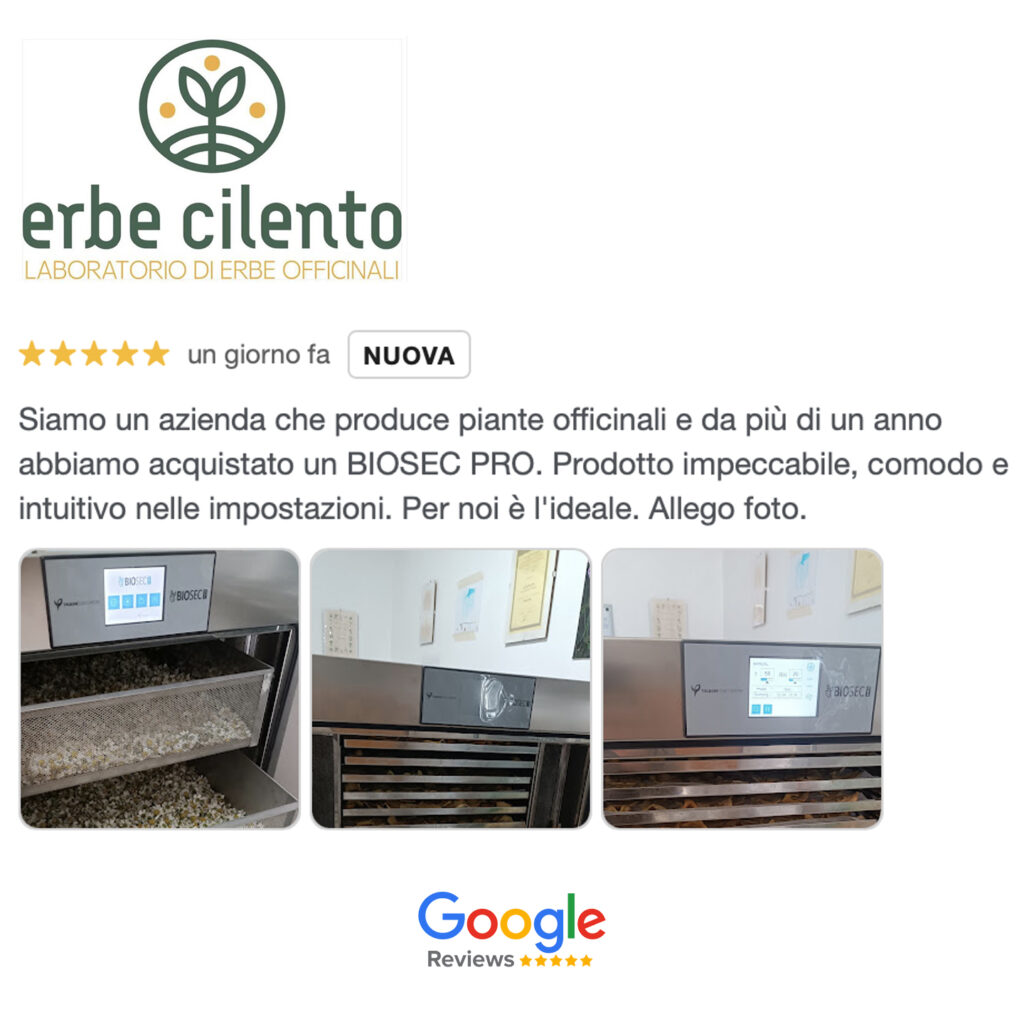
When looking for a review for a professional stainless steel, non-industrial dryer, the key point is not simply whether a particular machine is capable of functioning. Almost all instruments on the market perform the primary task of drying raw material. The real question to ask in order to make an informed investment is another: with what level of uniformity does the process take place, what degree of real control do you have over ventilation management, moisture disposal and what is the final organoleptic quality of the product obtained. For those who work daily with fruit, vegetables, medicinal herbs, mushrooms, food doughs or excellent artisanal preparations, these differences are immediately apparent in the vivid colour, the persistence of the aroma, the textural consistency and, consequently, in the overall economic performance of the business.
Professional stainless steel dryer review: what really matters
The adoption of stainless steel is historically the first element that catches the attention of anyone analysing an agro-food processing machine, and it is a correct consideration. In a business, artisan or semi-professional context, the use of this material is synonymous with rigorous hygiene, prolonged structural strength and suitability to withstand continuous and heavy work cycles. However, an accurate professional stainless steel dryer review cannot be limited to a simple superficial assessment of the outer shell.
A food dehydration plant must be judged as an integrated technological system. Within this overall vision, the crucial elements that determine the effectiveness of the investment are the fluid dynamics of the air, the homogeneous distribution of heat at every point of the drying chamber, the millimetric stability of the temperature, the ease of access for routine sanitising operations, the ergonomics of the drawers and the repeatability of the results on all load levels. If just one of these engineering pillars is lacking, the mere presence of stainless steel is not enough to guarantee a consistently high quality standard.
For this reason, professionals and productive realities who purchase a system for a processing workshop, a farm, a farmhouse or a handicraft line of shelf-stable products should examine the technical specifications beyond the nominal data and translate them into the real impact on the operational routine. A technical specification that promises great performance does not automatically translate into precise, gentle and uniform drying over the entire available surface area.
The value of stainless steel in a professional dryer
The choice of stainless steel becomes a strategic necessity when the dryer is intended for intensive use, frequent washing with professional detergents and to be integrated into a production context governed by strict hygiene and HACCP protocols, where tidiness and sanitation are the basis of daily work. Compared to polymeric materials or less noble metals, stainless steel offers absolute chemical stability, does not release substances, does not alter in contact with the high moisture content extracted from food, and resists the corrosive action of the natural acids found in fruit and vegetables.
However, there is a common misconception in the industry: the idea that the use of stainless steel in itself configures a machine as professional. The construction reality shows that machines with a steel body can be found on the market that conceal poor or badly designed airflow management inside them. Tools of this type force people to constantly monitor the cycle, manually rotating shelves or reversing the position of trays due to marked temperature differences between the top and bottom of the housing. In a professional supply chain, this approach results in a loss of valuable time, increased labour costs and finished product quality that inevitably varies from batch to batch.
The choice of material is therefore a prerequisite, but it must be supported by a coherent and solid technical design. Tauro Essiccatori, in designing the professional Biosec Pro range and the B.Master series, uses AISI 304 stainless steel for all components intended for direct contact with food, such as the drying shelves and box baskets dedicated to voluminous vegetable masses. A professional-level machine must not only guarantee a long service life, but must also allow companies to work with total peace of mind, reducing error margins to a minimum and ensuring maximum quality consistency.
Horizontal airflow: the detail that changes the result
If there is one engineering factor that deserves priority analysis within a professional stainless steel dryer review, it is undoubtedly the direction of the airflow. In the science of food dehydration, the homogeneity of the end result is not simply determined by the temperature set on the thermostat, but by the way the air stream passes through the products arranged on the shelves.
Many economical systems adopt vertical ventilation, moving air from the bottom to the top or vice versa. The structural limitation of this technology lies in the fact that the air, upon encountering the first layers of fresh, watery product, quickly becomes saturated with moisture and drags the evaporated water towards the subsequent baskets, slowing down or preventing the proper drying of the upper layers. This phenomenon creates a plug effect that forces excessive thinning of the load, wasting useful surface area.
On the contrary, the unidirectional horizontal airflow simultaneously and with the same intensity invests each tray, lapping the food both above and below. The air enters from one side of the tunnel and exits directly from the opposite side, conveying saturated moisture to the outside without any internal mixing of aromas or steam stagnation. In Tauro Dryers' construction philosophy, this fluid-dynamic scheme makes it possible to exploit the capacity of the machine one hundred per cent, even allowing the simultaneous drying of different products, such as aromatic herbs and fruit slices, without the risk of odour contamination. For those who process excellent raw materials from local or short chain crops, the uniformity of the flow guaranteed by the horizontal logic is not a mere technical detail, but the fundamental condition for preserving the real value of the harvest.
As confirmed by technical analyses and experiences shared by operators in the sector, the adoption of a horizontal flow system solves the root of the problems linked to drying differences between the various levels of the machinery. To find out more about the effectiveness of this method and understand the evolution of technologies applied to drying, you can consult the reviews and testimonials professionals who use these solutions daily in their laboratories.
Temperature, timing and organoleptic quality
A professional stainless steel plant must offer accurate electronic temperature control. In artisanal processing, it is not useful to chase extreme maximum temperatures to speed up times at the expense of the raw material; the priority is to set and maintain the ideal temperature level for the specific food matrix being processed.
Different matrices, such as mushrooms, herbs rich in essential oils, tomatoes cut in half, apple chips or chillies, exhibit completely different physical and chemical behaviours during water evaporation. Too high or poorly distributed heat input in the early stages can cause the outer cuticle of the food to harden, trapping moisture in the core of the product and triggering enzymatic browning processes or loss of heat-sensitive nutrients. In the world of conscious nutrition and raw foodism, for example, maintaining a constant temperature below 42-45 degrees Celsius is an absolute requirement to avoid denaturation of enzymes and vitamins.
Here we see the dividing line between an inexpensive machine and a critically engineered professional system. The quality of drying is measured in the ability to preserve intact the characteristics that make a food recognisable, natural and safe: the vibrancy of the original colour tone, the cleanliness of the flavour profile and the fragrance of the texture. A correctly managed process does not aim to obtain a simply dry product, but a stable, nutritionally intact food with a high added commercial value.
Real capacity and work organisation
The assessment of the production capacity of a professional stainless steel dryer should not be based solely on the number of declared shelves, but on the actual usable area expressed in square metres, the usable vertical distance between the levels, and the system's ability to maintain an unchanged airflow speed even at full load.
In an artisan food laboratory or professional kitchen, an undersized machine risks quickly becoming a bottleneck during seasonal peaks in raw material collection. Conversely, an excessively oversized machine without load-sharing systems can result in reduced efficiency when used frequently with few trays filled. The ideal configuration must be sized by analysing the average volumes of incoming fresh raw material, the seasonality of the crops and the internal logistics related to packaging.
Those who handle the processing of medicinal herbs in summer, mushrooms in autumn or vegetables at peak production periods know that the machinery must be able to integrate seamlessly into the company's operational rhythms. Solutions such as the Biosec Pro offer a usable area of 3 square metres distributed over 12 shelves of 40×60 centimetres, making it the optimal choice for workshops and micro-production. Designed specifically for fresh pasta dryers. When volumes grow, the modularity of the B.Master series allows you to go from the 14 square metres of the Base model up to the 50 square metres of the Twin XL version, allowing rigorous planning of industrial lots.
Energy consumption: reading it wisely
The analysis of energy consumption in a professional plant, as opposed to an industrial drying plant, requires an analytical and comprehensive approach, avoiding the mistake of only considering the maximum power absorbed expressed in kilowatts by the heating element. The true indicator of energy efficiency is the heat balance of the cycle, i.e. the ratio between the energy consumed and the kilograms of water actually evacuated over time.
A machine without structural thermal insulation or with inefficient air recirculation will tend to dissipate heat into the surrounding environment, lengthening drying cycle times to compensate for thermal losses. Longer process times directly affect the fixed costs of operation, reduce plant availability and subject the food to prolonged thermal stress. Advanced systems such as the Smart-Dry kit, available as an option for the dryer Biosec PRO by Tauro, They integrate electronic sensors capable of constantly monitoring the humidity level of the indoor air, managing the opening of saturated air valves in total autonomy and optimising hot recirculation flows, with energy savings of up to 40 per cent compared to traditional systems, and for the processing of difficult products such as fresh pasta.
The economic sustainability of a line of dried products is measured by considering the overall value recovered: the zeroing of food waste resulting from surpluses or irregular sizes, the extension of the shelf-life of artisanal products over twelve months and the creation of high-margin references such as functional snacks, breakfast mixes or gourmet flavourings. The energy cost of processing must be included within this overall economic calculation, where technological efficiency is the guarantee of company profit.
Cleaning, maintenance and business continuity
An operational aspect that is sometimes overlooked when choosing a drying machine is the practicality of routine maintenance and cleaning of internal components. The use of stainless steel facilitates cleaning operations, but it is the overall structural design that determines the actual time that personnel will have to dedicate to sanitising the machine at the end of each work cycle.
In a professional context, rapid and effective cleaning is a prerequisite to prevent the risk of aromatic or microbiological cross-contamination between different production batches, especially when alternating foodstuffs with intense aromas such as onions, mushrooms or herbs. A well-engineered system must have smooth internal surfaces, free of inaccessible crevices or sharp edges, and must allow for the rapid removal of shelves, runners and suction air filters to allow for thorough cleaning. Tauro's AISI 304 stainless steel shelves are designed to be washed and sanitised, reducing downtime in daily laboratory management.
Alongside construction ergonomics, operational continuity is guaranteed by the solidity of the after-sales service and the immediate availability of original spare parts. Choosing a system entirely manufactured and finished in Italy, at Tauro's Camisano Vicentino site, offers companies the certainty of being able to rely on a technical support direct, on the expertise of specialised technicians and continuous professional advice, which are indispensable to protect the investment in the long term.
For whom it makes sense to choose a professional stainless steel dryer
The purchase of a professional stainless steel system represents a strategic step for all those realities that intend to transform natural drying from an ancillary or occasional activity into an economic pillar of their business model. If for self-consumption or to test the first small-scale agricultural productions it may be sufficient to start with the domestic modules of the Biosec line, the move to professional systems becomes necessary when the objective is to market the finished product according to standardised, uniform and repeatable quality standards.
This type of machinery is primarily aimed at all those sectors intent on differentiating the company's offerings by valorising one hundred per cent of the seasonal harvest, to artisanal food laboratories, to fresh pasta producers who need gentle temperature-controlled ventilation cycles to avoid cracks on the surface of dough, to herbalists and wellness professionals who work with the dehydration of medicinal plants and gourmet edible flowers. In all these areas, the dryer ceases to be a simple household appliance and becomes a real production factor.
Expert's trick: the perfect crock effect and the valorisation of scraps
With a view to a circular economy and total reduction of waste in the laboratory, all parts considered cutting waste, such as the clean peels of carrots and tomatoes, the fibrous stalks of asparagus or the outer parts of leeks, can be recovered and turned into high-margin commercial resources. The correct method involves drying these scraps completely until they reach a crystalline state, then reducing them to a fine powder using a powerful blender or an electric blade grinder. The resulting powders, carefully sieved, can be stored for months in dry glass jars and can be used as pure flavour enhancers for soups and velvety soups, stable natural colouring agents for bread and fresh pasta mixes, or mixed with coarse sea salt to create artisanal aromatic salts, expanding the company's commercial range at zero cost.
The final verdict on a professional stainless steel dryer review
A serious and thorough evaluation should never stop at ascertaining the quality of the materials or the prestige of the brand, but must analyse the overall balance between the solid construction, the consistency of the thermodynamic design and the ease of integration into the daily work routine. In the segment of professional stainless steel dehydration equipment, the real value of an instrument is measured in its ability to work quietly, efficiently and predictably, guaranteeing the repeatability of the result without requiring continuous manual correction by laboratory personnel.
Stainless steel represents the best possible basis for guaranteeing hygiene, safety and durability, but the success of the food processing business stems from the combination of this noble material with uniform horizontal ventilation technology and a profound culture of natural drying methods. When these elements come together in a coherent engineering project, drying ceases to be a simple preservation method and becomes a strategic tool capable of respecting the integrity of the raw materials, enhancing the seasonality of the land and generating a concrete and lasting economic return for the company.
If you wish to optimise the production of your workshop, eliminate waste on your farm or discover the technological configuration best suited to your structural needs, we invite you to discover the full range of Made in Italy horizontal flow solutions by Tauro Essiccatori. Explore our dedicated catalogues and contact our technical specialists to receive professional, tailor-made advice designed to turn your raw material into stable and recognisable value on the market.
 Italian
  English
  German
  Spanish
  French
  Romanian