
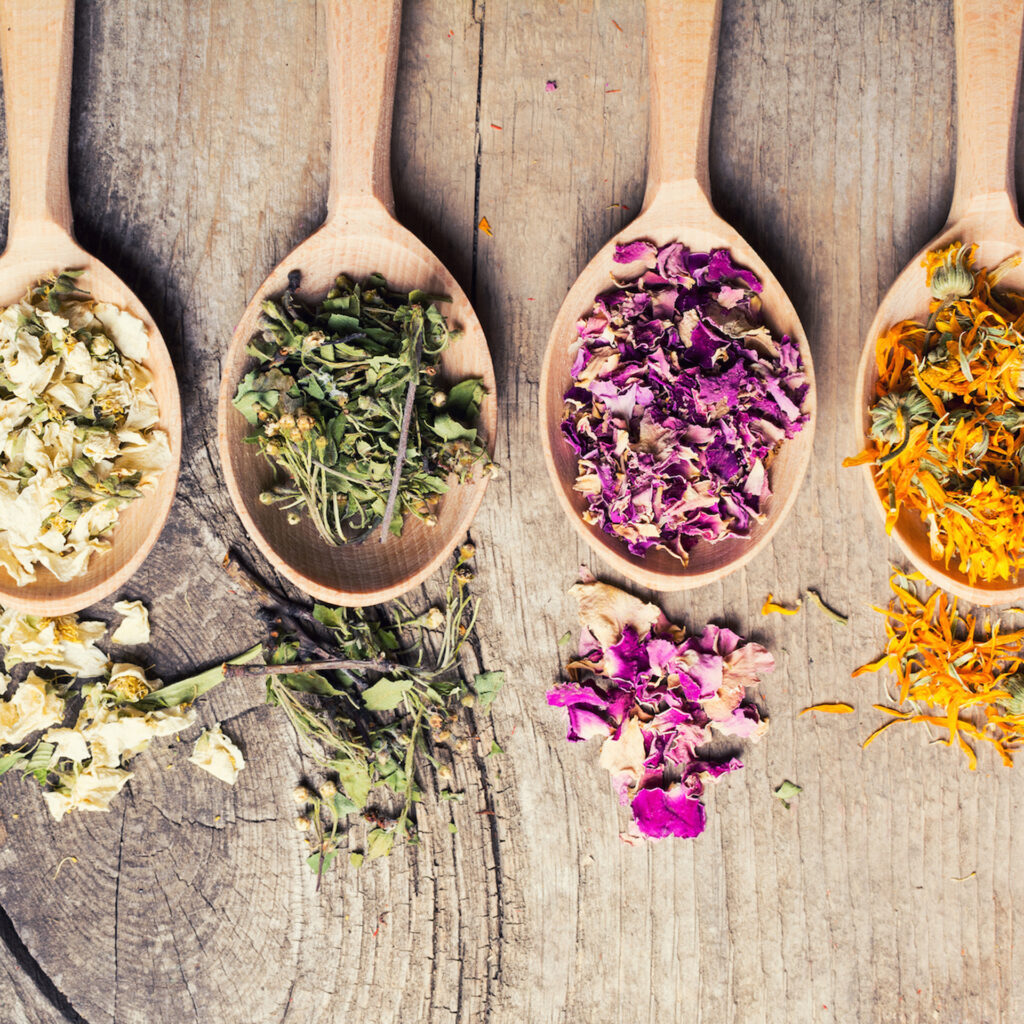
Into the world of medicinal and aromatic herbs and herbal shops, the quality of the final product depends largely on drying.
With controlled drying, you maintain the scent, colour and active ingredients of the plants, resulting in a clean, stable and safe product, ready for processing, packaging and sale over the counter.
For herbalists and artisan shops, drying also becomes a distinctive element: fresh products, customised blends and experiential workshops that tell the story of the supply chain and bring the customer closer.
Once harvested, medicinal plants must be treated with care to avoid fermentation and loss of aroma. Controlled drying means protecting the active ingredients, obtaining vivid colours and authentic fragrances and ensuring uniformity regardless of the climate.
This process increases the value of the product, facilitates packaging and makes the herbs more appealing to a quality- and naturalness-conscious clientele.
▸ Umbertide (PG)
«Dove vivo io il clima è molto umido, e già a metà settembre non è più possibile essiccare in maniera agevole. Così ho cercato in internet un modo per risolvere il problema e ho scoperto il mondo degli essiccatori. Me ne sono letteralmente innamorata e mi sono inventata di tutto e di più per il mondo dell’erboristeria»
- Ira Archilei
Medicinal and aromatic plants, mostly wild or naturally grown on one hectare in the Umbrian Apennines. No pesticides or plant protection products.
Herbal teas, infusions and more elaborate herbal preparations; customised blends and course products.
After years in the herbalist shop and a few courses, Ira started in the cellar but the high humidity prevented consistent results. The solution was the adoption of professional dryers: since then the cycles are replicable, the quality has improved and the project has grown (courses, markets and the “Adopt-a-Sod” project).
Direct sales at local markets (Umbertide Earth Market), courses and word of mouth; communication via social media and mailing lists; direct community involvement projects.
Vuoi capire come ottimizzare il tuo processo di essiccazione?
We help you choose the right technology, define cycles for your botanical species and set up a production flow through to packaging and sales.
👉 Scopri le soluzioni professionali più adatte per la tua produzione erboristica o bottega artigiana.
Drying means dehydrate, that is, subtracting from a food its share of water, which is often the bulk of its weight.
In this way, the raw material changes its appearance slightly, but retains - or rather concentrates - its organoleptic and nutritional properties.
Not only that: removing water decomposition and oxidation processes are stopped or drastically slowed down, and the shelf life of the product is greatly extended. from perishable to durable. This greatly simplifies logistics management, storage and sales.
Drying therefore allows preserve food better and longer, preserving its flavour and nutritional qualities.
You can drying and transform:
– frutta
– piccoli frutti
– frutta oleosa
– erbe aromatiche
– erbe officinali
– fiori
– spezie
– zafferano
– spirulina
– alghe e microalghe
– funghi
– cereali
– pasta
– carne
– pesce
– trebbie di birra
– bucce e vinacce
– proteine alternative
You can obtain and commercialise:
– chips e snack di frutta e verdura
– polveri e sali aromatizzati, insaporitori
– spezie, erbe aromatiche e fiori edibili
– sfoglie croccanti (leather) di frutta o verdura
– ortaggi e minestroni disidratati
– piatti pronti e preparati da cuocere
– barrette energetiche
– pasta fresca
– farine
– tisane
– pet food
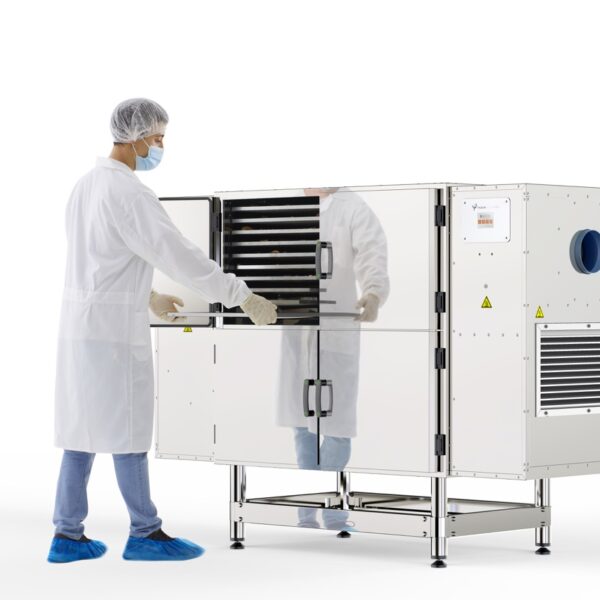
Yes, in order to market, sell or administer processed products, it is necessary to operate in a laboratory that is recognised by the health authorities (HACCP), even if it is small or located within the company.
Absolutely. Many facilities start with small quantities to test recipes, snacks or flavour powders before expanding production.
Yes. Drying makes it possible to reduce waste, valorise surpluses and offer natural products with low costs and a concrete economic return.
If you have a farm, drying is an optimal and efficient way to enhance the 100% of your production. You can process products grown by yourself or by third companies with whom you can create network synergies.
You get several benefits, all related:
- zero waste and convert surpluses into a long-term resource
- give a destination to aesthetically imperfect or damaged products by hailstorms or (increasingly frequent) frost, which you would not be able to sell otherwise
- diversify your business and minimise business risk
- increase the catalogue of your offer and distinguish yourself by competitors
- you can sell is directly to the final purchaser, in person and online; but also to retailers such as e-commerce, shops, farms and restaurants.
In general, the advantages of dried products are many.
If you make or trade dried products:
- obtain or resell food with a high shelf life (shelf life)
- greatly simplify the logistical management of your offer, from warehouse to sale
- create a line of healthy products without added sugar or preservatives, of course rich in fibre and nutrients
- conquer a steadily growing slice of the market, which demands healthy, artisanal and ready-to-eat products