

Are you a farm and looking for a way to give more value to what you grow?
Drying is the key to transforming your productions into unique, authentic and long-life products, reducing waste and opening up new sales opportunities.
By drying, fruit, vegetables, herbs and flowers become valuable ingredients, ready to be sold as such or processed in mixtures, powders, snacks, herbal teas or flavourings.
A natural method that preserves colour, fragrance and nutritional properties, allowing you to offer your customers the taste of seasonality even out of season.
Drying also means diversifying production, give new life to what would otherwise be lost and tell a more conscious and sustainable agriculture.
You can offer boxes of dried products, lines for shops and local markets or ingredients for chefs, agro-tourism and artisans of taste.
A concrete way to make your company more resilient, recognisable and independent.
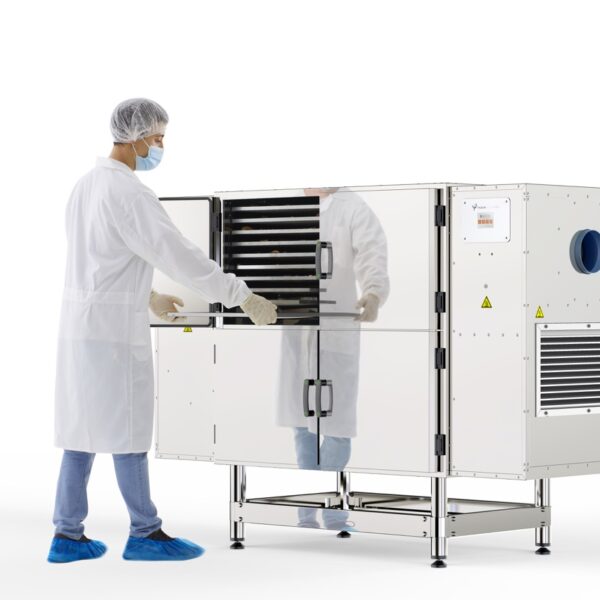
Professional drying is also suitable for small farms, agritourisms and family workshops.
With modular machinery and simple processes, you can start small, grow gradually and maintain control over every stage of production, from harvesting to packaging.

Podere Colombara - Imola (BO)
“We are an organic farm that cultivates and dries as its only process.
We make dried fruit! is our motto.
Of all the preservation methods, drying was exactly what we were looking for: a process that transformed the product as little as possible.”
- Giulia Serrao
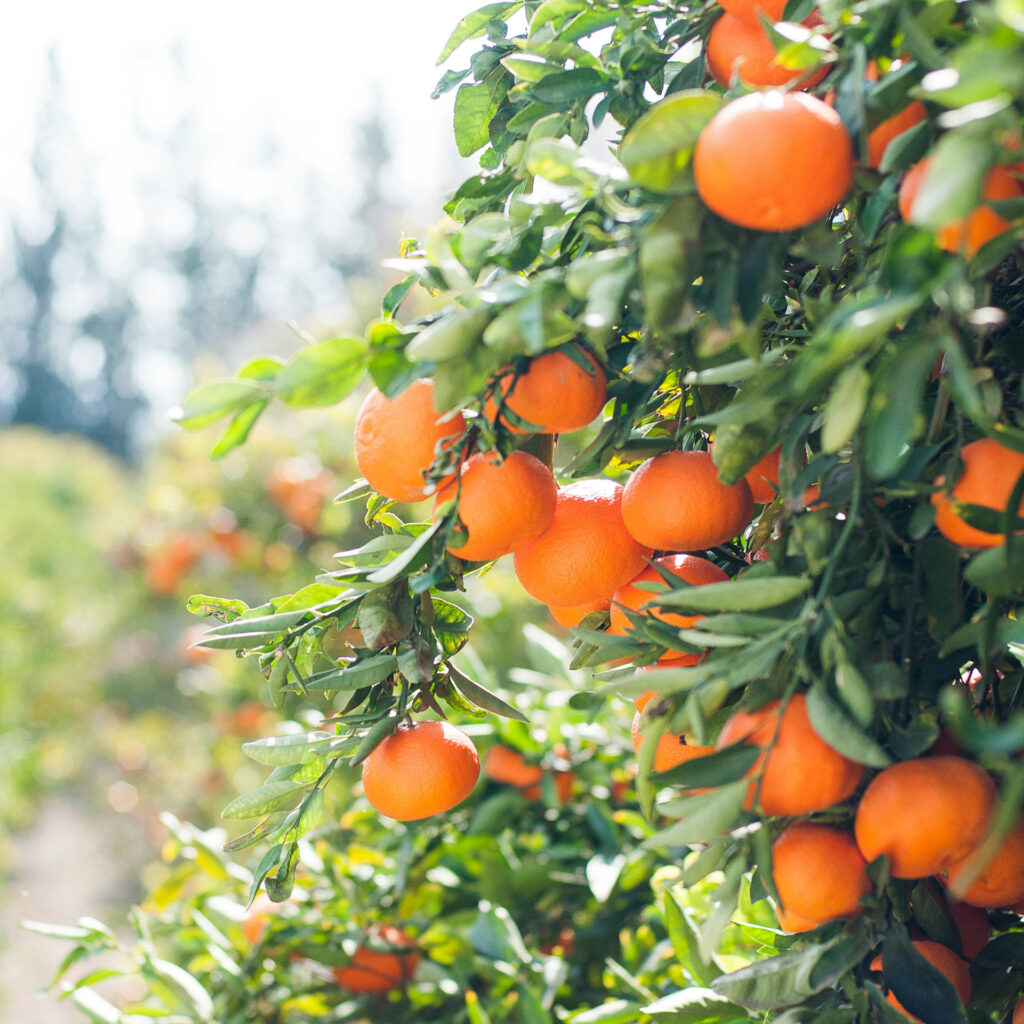
Mainly fruitapricots, plums, persimmons, strawberries, melon and cherries.
But also vegetables such as tomatoes, garlic, onions, courgettes and pumpkin.
They cultivate and dry directly, without any other processing, and when needed they use carefully selected organic farms.
Chips and natural powders to be used to flavour dishes, drinks or cheese.
At the beginning they only sold the fresh, but soon realised that it was difficult to place the whole product on the market.
Organic fruit, often imperfect, was sold off to cooperatives or even discarded.
During the markets, they met companies that transformed their crops into jams or juices and realised that this was the way forward.
They decided to experimenting with drying, by choosing a natural and non-invasive method of preservation.
“We are two biologists, and this helped us: we studied the various methods and fell in love with drying. It was exactly what we were looking for: a way to preserve the product without distorting it.”
The Podere Colombara started with the direct sales at markets and fairs, where contact with the public and tastings facilitated product knowledge.
Today, he continues to attend only a few selected events, focusing on distribution and online sales, through their own e-commerce and channels such as Amazon.
A concrete example of how drying can become the purest and most sustainable form of agricultural processing, valuing every fruit of the earth's labour.
Do you want to understand which model is best suited to your production?
We help you assess volumes, space and regulations to start your drying business correctly and sustainably.
👉 Discover the professional solutions best suited to your farm
Drying means dehydrate, that is, subtracting from a food its share of water, which is often the bulk of its weight.
In this way, the raw material changes its appearance slightly, but retains - or rather concentrates - its organoleptic and nutritional properties.
Not only that: removing water decomposition and oxidation processes are stopped or drastically slowed down, and the shelf life of the product is greatly extended. from perishable to durable. This greatly simplifies logistics management, storage and sales.
Drying therefore allows preserve food better and longer, preserving its flavour and nutritional qualities.
You can drying and transform:
- fruit
- small fruits
- oily fruit
- aromatic herbs
- medicinal herbs
- flowers
- spices
- saffron
- weeds
- fungi
- grain
- noodles
- meat
- fish
You can obtain and commercialise:
- fruit and vegetable chips and snacks
- flavoured powders and salts, flavourings
- spices, herbs and edible flowers
- crispy sheets (leather) of fruit or vegetables
- dehydrated vegetables and soups
- ready meals and preparations for cooking
- energy bars
- fresh pasta
- pet food
- infusions
Yes, in order to market, sell or administer processed products, it is necessary to operate in a laboratory that is recognised by the health authorities (HACCP), even if it is small or located within the company.
Absolutely. Many facilities start with small quantities to test recipes, snacks or flavour powders before expanding production.
Yes. Drying makes it possible to reduce waste, valorise surpluses and offer natural products with low costs and a concrete economic return.
If you have a farm, drying is an optimal and efficient way to enhance the 100% of your production. You can process products grown by yourself or by third companies with whom you can create network synergies.
You get several benefits, all related:
- zero waste and convert surpluses into a long-term resource
- give a destination to aesthetically imperfect or damaged products by hailstorms or (increasingly frequent) frost, which you would not be able to sell otherwise
- diversify your business and minimise business risk
- increase the catalogue of your offer and distinguish yourself by competitors
- you can sell is directly to the final purchaser, in person and online; but also to retailers such as e-commerce, shops, farms and restaurants.
In general, the advantages of dried products are many.
If you make or trade dried products:
- obtain or resell food with a high shelf life (shelf life)
- greatly simplify the logistical management of your offer, from warehouse to sale
- create a line of healthy products without added sugar or preservatives, of course rich in fibre and nutrients
- conquer a steadily growing slice of the market, which demands healthy, artisanal and ready-to-eat products