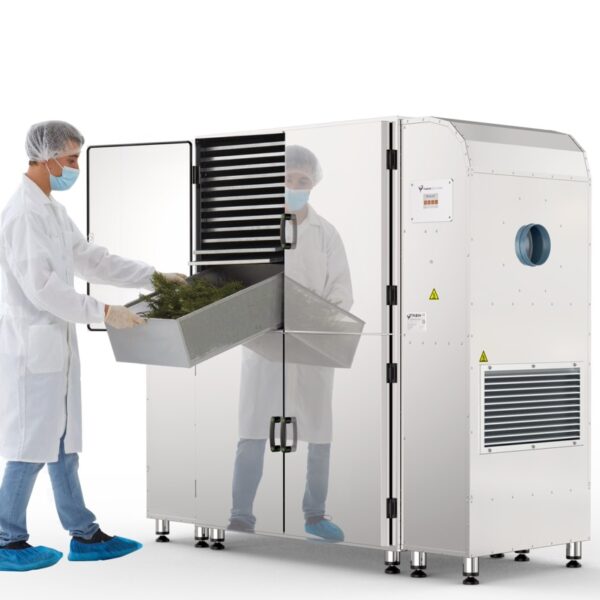


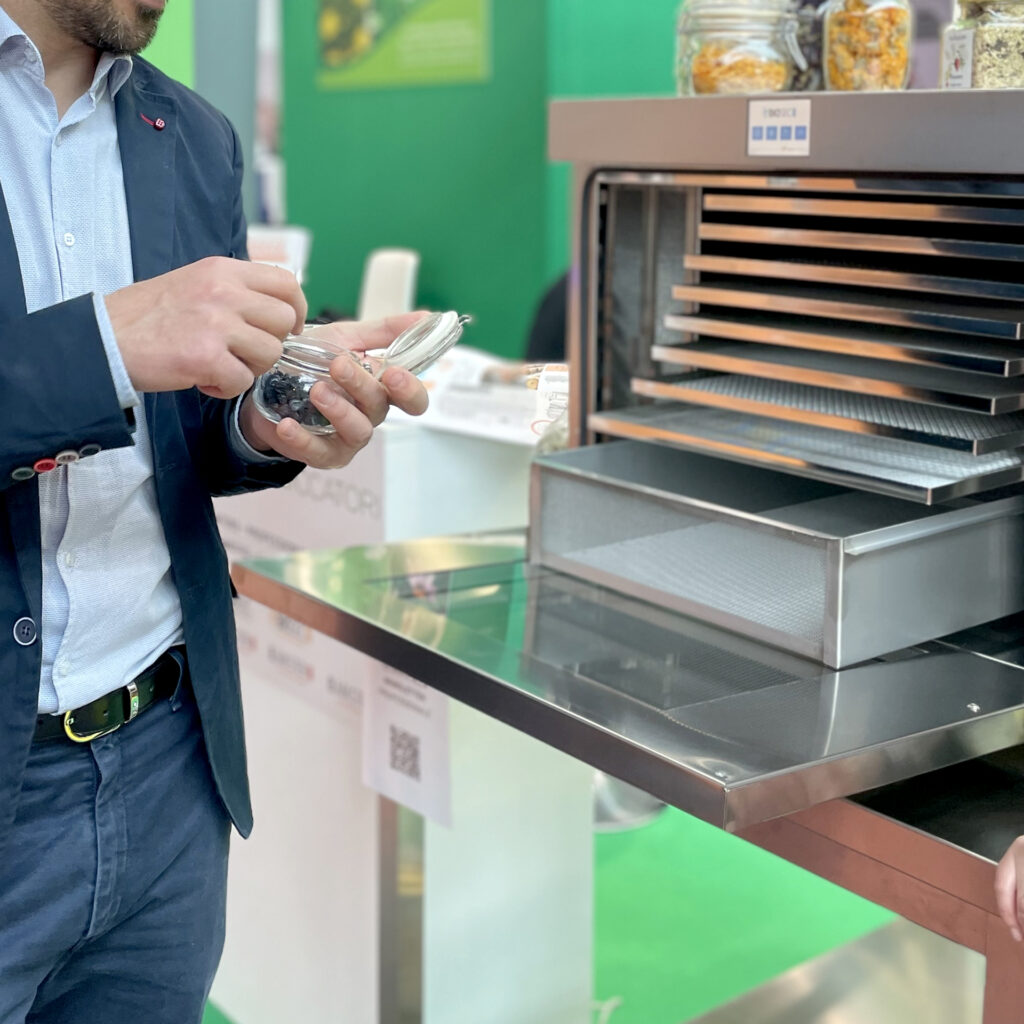
Drying is not just a preservation technique, but a real experimental laboratory for the future of food. Universities, research centres, start-ups and secondary institutes are rediscovering its potential to develop new ingredients, reduce waste and make production processes more sustainable.
From dehydration curve mapping to the definition of replicable protocols, drying makes it possible to combine scientific research and practical applications. Students and researchers can observe how humidity, temperature and airflow affect product quality, enhancing fresh raw materials, agricultural by-products and new food varieties.
More and more secondary schools and vocational colleges include drying in their teaching laboratories: a concrete opportunity to bring students closer to food science, experimentation and sustainable innovation.
Universities, research laboratories, start-up incubators, technical institutes and secondary schools with agri-food laboratories, companies experimenting with new production models.
Chi si dedica alla ricerca e all’innovazione alimentare conosce bene la sfida: trasformare un’intuizione in un processo replicabile, sostenibile e rispettoso della materia prima. Spesso, il divario tra teoria e applicazione pratica è rappresentato dalla capacità di preservare l’integrità di ciò che viene studiato. L’essiccazione non è una semplice tecnica, ma un linguaggio per decodificare il futuro del settore agroalimentare, riducendo gli sprechi e restituendo valore a ogni singola risorsa.
Sperimentare con l’essiccazione professionale significa entrare in un ciclo virtuoso dove nulla va perduto. Nei laboratori di ricerca e nelle startup, questa tecnologia permette di mappare le curve di disidratazione con precisione chirurgica. Ogni test diventa un’opportunità per definire protocolli che garantiscano il mantenimento delle proprietà organolettiche e dei principi attivi, trasformando eccedenze o sottoprodotti in nuovi ingredienti ad alto valore aggiunto.
Dall’aula universitaria al primo impianto pilota, la tecnologia Tauro accompagna l’evoluzione del tuo progetto. La scalabilità è il cuore della nostra visione: permettere a chi gestisce una startup o un progetto di ricerca di testare piccoli lotti con la stessa precisione dei grandi impianti industriali. Questo approccio garantisce la resilienza del modello di business e la sicurezza che ogni passaggio, dal prototipo alla produzione, sia guidato dalla qualità e dalla consapevolezza.
Inserire l’essiccazione nei percorsi formativi delle scuole secondarie e degli istituti professionali significa offrire strumenti concreti per toccare con mano la scienza degli alimenti. Chi studia oggi deve imparare a gestire il tempo e le risorse in modo etico. Attraverso l’uso degli essiccatori, il corpo studentesco può osservare la trasformazione fisica e chimica del prodotto, imparando che l’innovazione più autentica è quella che rispetta i ritmi della natura, valorizzando il lavoro agricolo e artigianale.
Tauro collaborates with research institutions, universities, start-up incubators and school laboratories, providing professional technology and technical support to turn drying into a applied research and training.
👉 Scopri le soluzioni professionali più adatte per il tuo istituto di formazione o start-up
Drying means dehydrate, that is, subtracting from a food its share of water, which is often the bulk of its weight.
In this way, the raw material changes its appearance slightly, but retains - or rather concentrates - its organoleptic and nutritional properties.
Not only that: removing water decomposition and oxidation processes are stopped or drastically slowed down, and the shelf life of the product is greatly extended. from perishable to durable. This greatly simplifies logistics management, storage and sales.
Drying therefore allows preserve food better and longer, preserving its flavour and nutritional qualities.
You can drying and transform:
– frutta
– piccoli frutti
– frutta oleosa
– erbe aromatiche
– erbe officinali
– fiori
– spezie
– zafferano
– spirulina
– alghe e microalghe
– funghi
– cereali
– pasta
– carne
– pesce
– trebbie di birra
– bucce e vinacce
– proteine alternative
You can obtain and commercialise:
– chips e snack di frutta e verdura
– polveri e sali aromatizzati, insaporitori
– spezie, erbe aromatiche e fiori edibili
– sfoglie croccanti (leather) di frutta o verdura
– ortaggi e minestroni disidratati
– piatti pronti e preparati da cuocere
– barrette energetiche
– pasta fresca
– farine
– tisane
– pet food
Yes, in order to market, sell or administer processed products, it is necessary to operate in a laboratory that is recognised by the health authorities (HACCP), even if it is small or located within the company.
Absolutely. Many facilities start with small quantities to test recipes, snacks or flavour powders before expanding production.
Yes. Drying makes it possible to reduce waste, valorise surpluses and offer natural products with low costs and a concrete economic return.
If you have a farm, drying is an optimal and efficient way to enhance the 100% of your production. You can process products grown by yourself or by third companies with whom you can create network synergies.
You get several benefits, all related:
- zero waste and convert surpluses into a long-term resource
- give a destination to aesthetically imperfect or damaged products by hailstorms or (increasingly frequent) frost, which you would not be able to sell otherwise
- diversify your business and minimise business risk
- increase the catalogue of your offer and distinguish yourself by competitors
- you can sell is directly to the final purchaser, in person and online; but also to retailers such as e-commerce, shops, farms and restaurants.
In general, the advantages of dried products are many.
If you make or trade dried products:
- obtain or resell food with a high shelf life (shelf life)
- greatly simplify the logistical management of your offer, from warehouse to sale
- create a line of healthy products without added sugar or preservatives, of course rich in fibre and nutrients
- conquer a steadily growing slice of the market, which demands healthy, artisanal and ready-to-eat products