
Do you run an agritourism, a B&B or an educational farm and want to make the most of your cuisine?
Drying is the perfect solution for turning fruit, vegetables and herbs into natural, durable and creative ingredients, to be used in dishes, drinks, snacks or educational activities, reducing waste and expanding the possibilities of supply.
By drying you can transform surpluses from your garden or local suppliers into chips, powders, flavourings and natural mixes, ready to enrich sweet and savoury dishes, drinks, cheeses and many other preparations.
A natural method that maintains taste, colour and nutrients, allowing you to offer your guests original gastronomic experiences all year round.
Drying also means offer your guests exclusive products, telling the story of the area and your work.
You can create artisanal snack lines, enrich breakfasts with dried fruit, make spice and flavour mixes for in-house catering, or develop educational activities and experiential workshops.
A way to make your facility more attractive, sustainable and original.
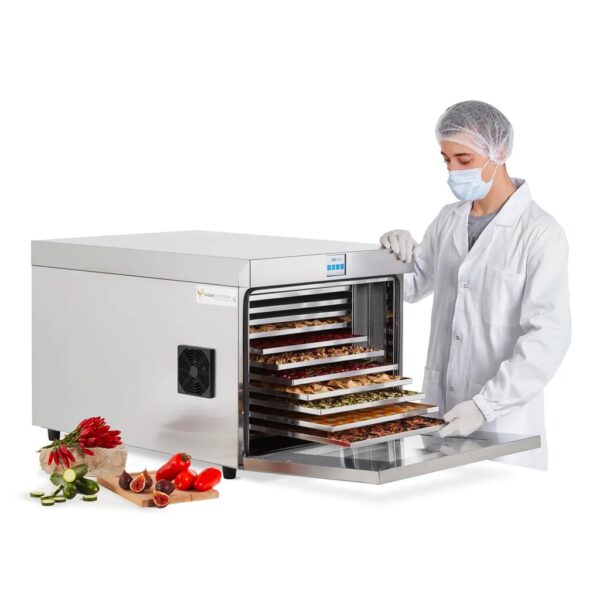
Professional drying is suitable for small and family businesses.
With modular machinery and simple processes, you can start experimenting with small quantities, maintain control over production and offer quality products without excessive bureaucracy.
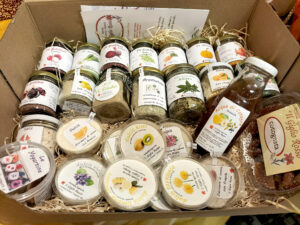
Agriturismo Il Giglio Rosso - Arsiero (VI)
“I have always hated to throw away surplus product and finally in drying I found the solution not to waste anything anymore.
They are products that are used - and I myself use - in the kitchen to flavour dishes, drinks and cheeses.
I also teach courses for mothers, children and schools.”
- Susy Miola
Mainly fruit and vegetables from their own garden, or the redundancies of friendly farms.
Chips and natural powders to be used to flavour dishes, drinks or cheese.
The family runs a micro mountain farm.
After growing and processing products such as preserves and pickles, Susy decided to tackle the problem of waste.
He started with a small home dryer, experimenting with apples and persimmons, and then moved on to more powerful machines.
Today it has an authorised laboratory for third-party processing, also processing products from other farms.
It sells mainly to the Campagna Amica market in Vicenza and participates in trade fairs and events.
The direct presentation of products, including tastings, proves more effective than traditional advertising.
Furthermore, as Educational Farm, organises small courses for mothers, children and schools, explaining the drying technique and involving participants in practical activities.
A concrete example of how drying can become tool for creativity, sustainability and education, enhancing local products and offering unique experiences to guests.
Do you want to understand how to integrate drying in your accommodation?
We help you choose machinery, plan volumes and comply with regulations to create quality products and new experiences for your guests.
👉 Discover the most suitable professional solutions for your agritourism or educational farm
Drying means dehydrate, that is, subtracting from a food its share of water, which is often the bulk of its weight.
In this way, the raw material changes its appearance slightly, but retains - or rather concentrates - its organoleptic and nutritional properties.
Not only that: removing water decomposition and oxidation processes are stopped or drastically slowed down, and the shelf life of the product is greatly extended. from perishable to durable. This greatly simplifies logistics management, storage and sales.
Drying therefore allows preserve food better and longer, preserving its flavour and nutritional qualities.
You can drying and transform:
- fruit
- small fruits
- oily fruit
- aromatic herbs
- medicinal herbs
- flowers
- spices
- saffron
- weeds
- fungi
- grain
- noodles
- meat
- fish
You can obtain and commercialise:
- fruit and vegetable chips and snacks
- flavoured powders and salts, flavourings
- spices, herbs and edible flowers
- crispy sheets (leather) of fruit or vegetables
- dehydrated vegetables and soups
- ready meals and preparations for cooking
- energy bars
- fresh pasta
- pet food
- infusions
Yes, in order to market, sell or administer processed products, it is necessary to operate in a laboratory that is recognised by the health authorities (HACCP), even if it is small or located within the company.
Absolutely. Many facilities start with small quantities to test recipes, snacks or flavour powders before expanding production.
Yes. Drying makes it possible to reduce waste, valorise surpluses and offer natural products with low costs and a concrete economic return.
If you have a farm, drying is an optimal and efficient way to enhance the 100% of your production. You can process products grown by yourself or by third companies with whom you can create network synergies.
You get several benefits, all related:
- zero waste and convert surpluses into a long-term resource
- give a destination to aesthetically imperfect or damaged products by hailstorms or (increasingly frequent) frost, which you would not be able to sell otherwise
- diversify your business and minimise business risk
- increase the catalogue of your offer and distinguish yourself by competitors
- you can sell is directly to the final purchaser, in person and online; but also to retailers such as e-commerce, shops, farms and restaurants.
In general, the advantages of dried products are many.
If you make or trade dried products:
- obtain or resell food with a high shelf life (shelf life)
- greatly simplify the logistical management of your offer, from warehouse to sale
- create a line of healthy products without added sugar or preservatives, of course rich in fibre and nutrients
- conquer a steadily growing slice of the market, which demands healthy, artisanal and ready-to-eat products